





What's Happening?
Actor Chris Evans has disclosed that Marvel Studios approached him about continuing his role as Steve Rogers, even before the release of 'Avengers: Endgame' in 2019. According to Evans, Marvel Studios president Kevin Feige and co-president Louis D'Esposito
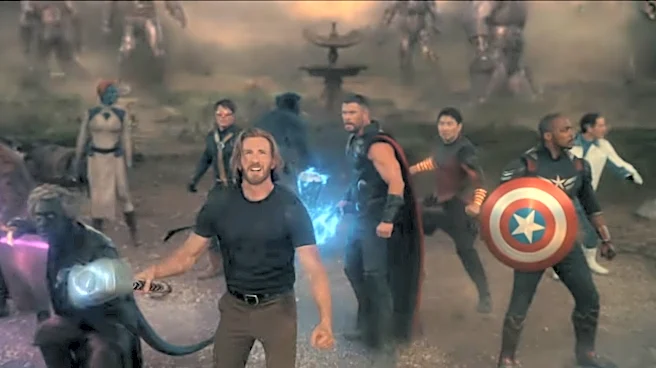
proposed a new direction for the character, suggesting Steve Rogers would no longer be Captain America but would instead take on the mantle of 'Nomad.' Evans stated that he was presented with a compelling pitch but ultimately declined at the time, feeling content with how his character's story concluded in 'Endgame.' Despite publicly denying any potential return to the Marvel Cinematic Universe in subsequent years, Evans has now confirmed that secret discussions with Marvel continued. He is currently preparing to reprise his role as Steve Rogers in the upcoming film 'Avengers: Doomsday.' Footage from 'Avengers: Doomsday' shows Steve and Peggy Carter living together and raising a son, which raises questions about the narrative path for his return, given his previous storyline of passing the Captain America shield to Sam Wilson.
Why It's Important?
This revelation is significant for the Marvel Cinematic Universe (MCU) and its fanbase, as it sheds light on the extensive planning and creative discussions that shape the franchise's future. The initial proposal for Steve Rogers to become 'Nomad' indicates Marvel's long-term vision for its characters and willingness to explore alternative storylines, even for its most iconic heroes. Evans's eventual agreement to return, despite previous statements of retirement, underscores the persuasive power of Marvel's creative team and the potential for beloved characters to re-enter the narrative in unexpected ways. For fans, this news provides insight into the behind-the-scenes decision-making and builds anticipation for 'Avengers: Doomsday,' as it promises to address how Steve Rogers's story will evolve after his apparent retirement in 'Endgame.' The continuity implications of his return, particularly regarding the passing of the shield, will likely be a major point of interest and discussion among viewers.
What's Next?
The immediate next step is the release of 'Avengers: Doomsday,' where Chris Evans will officially reprise his role as Steve Rogers. The film is expected to address how Steve Rogers returns to the narrative and how his new life with Peggy Carter and their son fits into the broader MCU timeline, especially considering the events of 'Avengers: Endgame.' Fans will be keenly watching to see how Marvel resolves the continuity questions surrounding Steve's return and the implications for Sam Wilson's role as Captain America. Further details about the 'Nomad' storyline, which was initially pitched to Evans, may also emerge, potentially influencing future character arcs or spin-offs. The co-director of 'Avengers: Doomsday,' Anthony Russo, has emphasized Evans's commitment to preserving the cinematic experience, suggesting that Marvel is carefully crafting the reveal and integration of Steve Rogers back into the universe.
Beyond the Headlines
The ongoing discussions and eventual return of Chris Evans as Steve Rogers highlight a broader trend in major cinematic franchises: the fluid nature of character retirements and the strategic use of fan-favorite actors to maintain audience engagement. This situation demonstrates how studios like Marvel often keep doors open for popular characters, even after seemingly definitive exits, to leverage their established appeal. Ethically, it raises questions about the authenticity of actors' public statements regarding their future roles versus the behind-the-scenes negotiations that can lead to reversals. Culturally, the return of Steve Rogers taps into a deep well of nostalgia and affection for the character, potentially reigniting interest among lapsed viewers and reinforcing the MCU's ability to evolve while honoring its past. This approach also underscores the commercial imperative to deliver what audiences desire, even if it means re-contextualizing previous narrative conclusions.