




What's Happening?
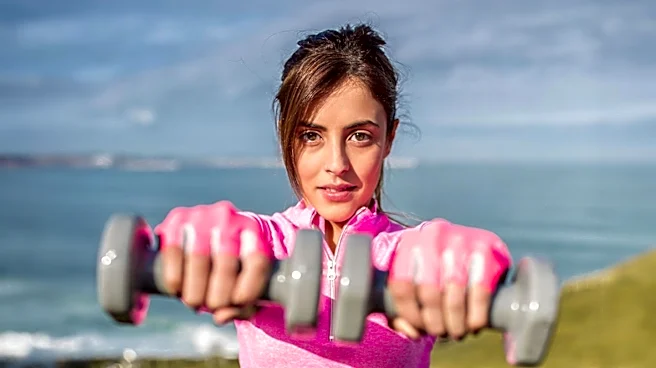
Personal trainer Pippa Sealey has designed a home dumbbell workout intended to replicate the variety and effectiveness of a gym-based routine. This workout is specifically for individuals who wish to build strength without attending a gym. The program
incorporates techniques such as tempo training, which focuses on the duration of each movement phase to increase muscle tension, and supersets, where two exercises are performed consecutively without rest to enhance intensity. Sealey emphasizes that these methods allow for increased intensity at home by adjusting sets, reps, and tempo. The workout includes exercises like deficit calf raises, single-leg bridges, dumbbell goblet squats, dumbbell Romanian deadlifts, half-kneeling single-arm dumbbell presses, dumbbell reverse lunges, dumbbell side bends, and dumbbell dead bug pull-overs. The recommendation comes from an individual who, despite years of gym attendance, found significant progress with home dumbbell workouts after relocating and being unable to find a suitable gym.
Why It's Important?
This development is important for the U.S. fitness and wellness industry, particularly as it caters to a growing demographic seeking convenient and effective home-based fitness solutions. The emphasis on dumbbell workouts highlights the accessibility of strength training, requiring minimal equipment compared to a full gym setup. This approach can democratize fitness, making strength building more attainable for individuals with time constraints, geographical limitations, or those who prefer exercising in a private setting. For businesses, this could drive demand for adjustable dumbbells and related home fitness accessories, potentially shifting consumer spending patterns away from traditional gym memberships. It also underscores the evolving landscape of personal training, with trainers adapting their expertise to home environments and digital platforms, offering tailored programs that challenge the conventional view of gym superiority for strength gains.
What's Next?
The trend of effective home workouts, particularly those utilizing minimal equipment like dumbbells, is likely to continue gaining traction. We can anticipate an increase in demand for specialized home workout programs, online personal training services, and innovative home fitness equipment. Fitness professionals may further develop and market routines that maximize results with limited resources, potentially leading to new certifications or specializations in home-based strength training. Consumers might see more integrated fitness apps and platforms offering guided dumbbell workouts, tempo tracking, and superset programming. Additionally, manufacturers of adjustable dumbbells and other compact strength equipment could experience sustained growth, prompting further innovation in product design to meet diverse user needs and space constraints.
Beyond the Headlines
Beyond the immediate practical benefits, this shift towards effective home workouts carries broader implications for public health and lifestyle. It challenges the long-held perception that significant strength gains are exclusively achievable in a gym setting, potentially empowering more individuals to prioritize physical activity. This accessibility could contribute to a reduction in sedentary lifestyles and an improvement in overall population health, as barriers to entry for strength training are lowered. Ethically, it raises questions about equitable access to fitness, as home workouts can be more inclusive for those who face social, financial, or logistical hurdles in accessing traditional gyms. Culturally, it reinforces the growing value placed on personal autonomy and convenience in health and wellness, suggesting a long-term shift in how society views and engages with physical fitness.