
What's Happening?
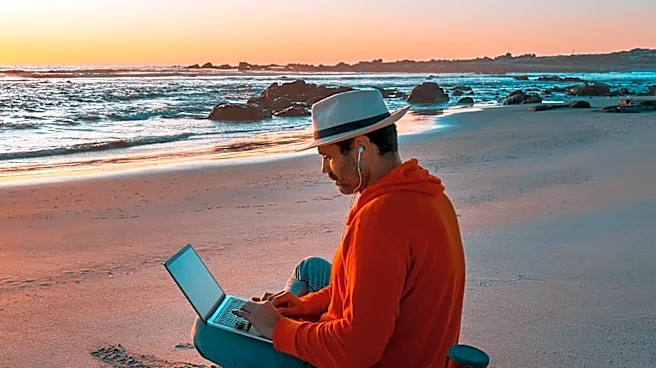
A growing number of American digital nomads are choosing to relocate from the U.S. to international cities, driven by factors such as lifestyle preferences and the pursuit of more affordable healthcare.
Research from the Kogod School of Business indicates that over 1.3 million Americans travel to Mexico annually for medical, dental, and optometric care, highlighting a significant motivation for living abroad. This trend is leading Americans to establish remote work bases in various international destinations, where they can maintain their U.S.-based employment while benefiting from a lower cost of living and more accessible healthcare services. The article identifies specific international cities that are becoming popular hubs for these American remote workers, signaling a broader shift in how and where Americans choose to live and work.
Why It's Important?
This exodus of American digital nomads has several important implications. For the individuals, it offers a pathway to a higher quality of life, reduced financial strain, and access to healthcare that might be prohibitively expensive in the U.S. This can lead to improved well-being and greater financial freedom. For the U.S., it represents a potential brain drain, as skilled workers choose to contribute their economic activity elsewhere, even if their employment remains with U.S. companies. It also underscores persistent issues within the U.S. healthcare system and cost of living, which are significant drivers for these relocations. For the host countries, the influx of American digital nomads can boost local economies through increased spending and investment, but it can also lead to challenges such as rising housing costs and cultural integration issues.
What's Next?
As this trend continues, it is likely that more Americans will explore international relocation for remote work. This could prompt U.S. policymakers to re-evaluate domestic policies related to healthcare costs and affordability, potentially leading to discussions about reforms aimed at retaining talent within the country. Host countries may further develop infrastructure and services tailored to digital nomads, including specialized visa programs, co-working spaces, and expat communities. The demand for international tax and legal advice for American citizens living abroad will also increase. Furthermore, businesses may need to adapt their HR policies to better support employees who choose to work from international locations, addressing issues like time zone differences, compliance with local labor laws, and ensuring equitable benefits.
Beyond the Headlines
The movement of American digital nomads abroad reflects deeper societal shifts beyond just economic considerations. It highlights a growing desire for a more balanced lifestyle, where work is integrated into a broader life experience rather than being the sole focus. This trend also challenges traditional notions of national identity and belonging, as individuals maintain ties to their home country while actively participating in foreign communities. Ethically, it raises questions about the responsibilities of individuals and corporations in a globalized workforce, particularly concerning fair labor practices and environmental impact in host countries. Culturally, it fosters greater cross-cultural understanding and exchange, but also necessitates careful consideration of how to integrate new populations without displacing local communities or eroding local cultures. This phenomenon is a microcosm of broader global interconnectedness and the evolving nature of work in the 21st century.