
What's Happening?
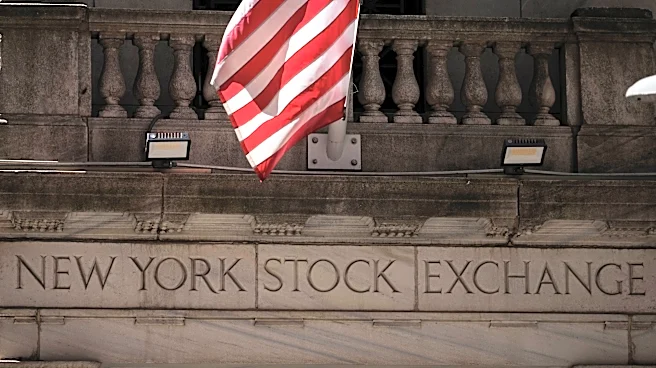
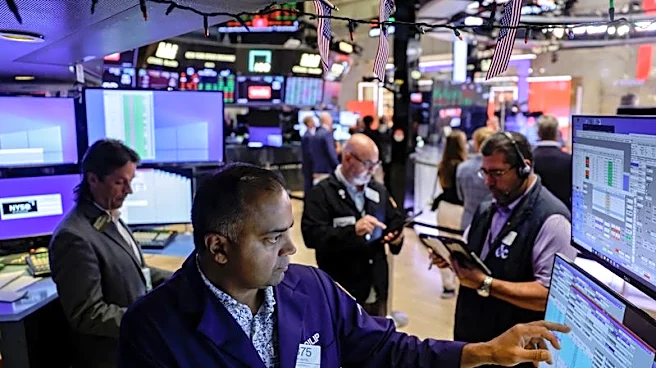
U.S. stocks have edged further from their record highs as oil prices continue to fluctuate due to ongoing geopolitical tensions. The S&P 500 fell by 0.3%, while the Dow Jones Industrial Average and the Nasdaq
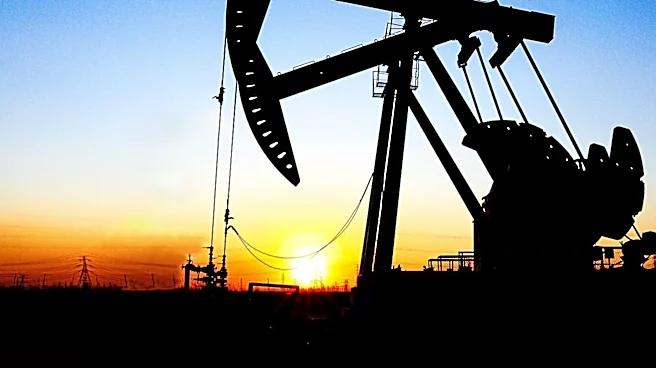
composite also experienced declines. The volatility in oil prices is attributed to the conflict between the United States and Iran, which has led to the closure of the Strait of Hormuz, a critical passage for global oil supply. This has resulted in higher oil prices, contributing to inflationary pressures. The Federal Reserve is closely monitoring these developments, with economists expecting a slight deceleration in inflation to 3.4% in July.
Why It's Important?
The ongoing geopolitical tensions and fluctuating oil prices have significant implications for the U.S. economy and stock market. Higher oil prices contribute to inflation, which can impact consumer spending and economic growth. The Federal Reserve's response to inflation, particularly its interest rate decisions, will be crucial in shaping the economic outlook. A potential interest rate hike could slow economic growth and affect stock prices. Additionally, the uncertainty surrounding the conflict with Iran adds to market volatility, affecting investor confidence and decision-making.
What's Next?
The Federal Reserve's upcoming meeting in September will be closely watched, as traders are betting on a potential interest rate hike. The outcome of this meeting will have implications for the U.S. economy and stock market. Additionally, the resolution of the conflict with Iran and the reopening of the Strait of Hormuz will be critical in stabilizing oil prices and reducing inflationary pressures. Investors will need to navigate these uncertainties and adjust their strategies accordingly.