


What's Happening?
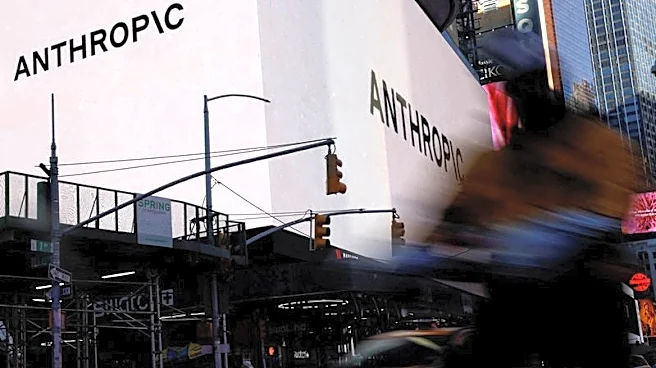
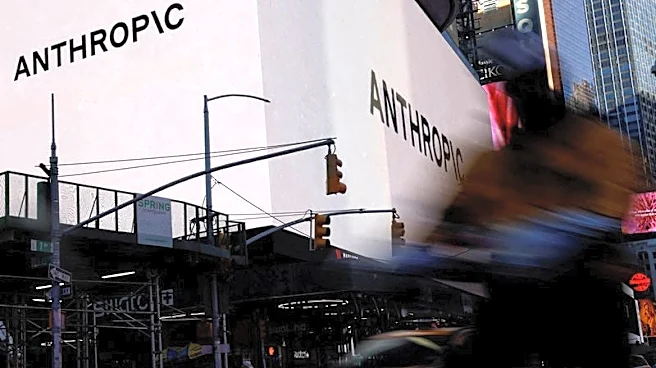
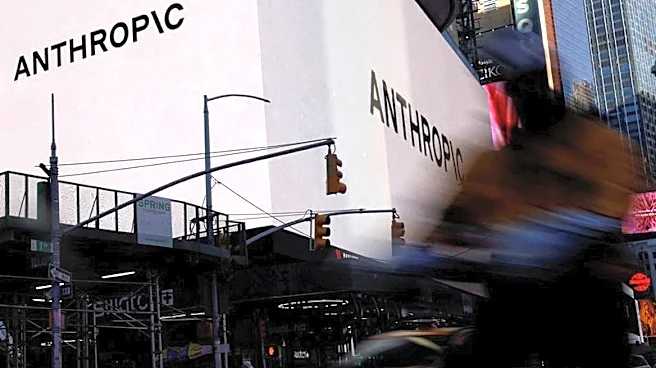
Anthropic's recent Initial Public Offering (IPO) has generated significant wealth, with an estimated 1,000 employees now holding equity valued at over $100 million each. The company's market capitalization reached approximately $1.28 trillion, making
it the second-largest IPO by valuation this year, following SpaceX. The offering raised around $79 billion, with an additional $26 billion from strategic partners like Google and Nvidia. This substantial wealth creation has brought increased visibility to Anthropic's employees and executives, including CEO Dario Amodei, President Daniela Amodei, and Chief Science Officer Jared Kaplan, all of whom sold small portions of their equity. The company has also experienced rapid growth, expanding from approximately 940 employees at the end of 2024 to over 5,300 by September 2026, with revenue for the first nine months of 2026 reaching $33.2 billion.
Why It's Important?
The creation of a large number of new centi-millionaires in Silicon Valley following Anthropic's IPO has significant implications for personal security within the tech industry. According to the Wall Street Journal, threats targeting AI leaders and data centers increased sevenfold between late February and May of this year. Incidents such as an attempted firebombing at Sam Altman's home and an intruder warning an Anthropic executive of a threat highlight the escalating risks. Furthermore, a listening device was discovered in a sensitive discussion room at OpenAI, leading to an FBI arrest. These events underscore a growing trend of security concerns for high-profile tech executives and their families. Public filings indicate that executive protection spending across the S&P 500 tech companies rose from 26.8 percent in 2021 to 38.1 percent in 2025, with the CEOs of the ten largest tech companies spending over $45 million combined on personal security in 2024 alone. This trend suggests that personal security is no longer a vanity expenditure but a critical risk mitigation strategy in the current environment.
What's Next?
For newly wealthy Anthropic employees, advisors, and early investors, immediate action regarding personal security is advised. This includes conducting professional risk assessments of residences, family online exposure, and travel patterns to understand their updated threat profiles. Implementing residential security programs and evaluating the need for executive protection for themselves and their families are crucial next steps. Building relationships with security partners who understand the Silicon Valley environment and can scale with evolving needs is also recommended. The rapid shift from private to public wealth means that the window for proactive security measures is narrow, as the increased visibility inherently elevates potential risks. The ongoing rise in threats against AI leaders suggests that these security concerns will continue to be a prominent issue for the foreseeable future.
Beyond the Headlines
The surge in security concerns for tech executives extends beyond individual protection, reflecting broader societal anxieties surrounding technological advancements, particularly in artificial intelligence. As Palantir CEO Alex Karp noted, when people perceive their jobs are threatened by AI, they may react with hostility. This sentiment contributes to a complex threat environment where personal security becomes intertwined with public perception and the ethical implications of AI development. The substantial wealth generated by companies like Anthropic also highlights growing economic disparities, which can further fuel resentment and potential threats. The increased spending on executive protection by major tech companies signifies a shift in corporate responsibility, acknowledging the need to safeguard not only assets but also the well-being of their key personnel in an increasingly volatile landscape. This trend may lead to a more formalized and integrated approach to personal security within corporate structures, potentially influencing industry standards and best practices for executive safety.