





What's Happening?
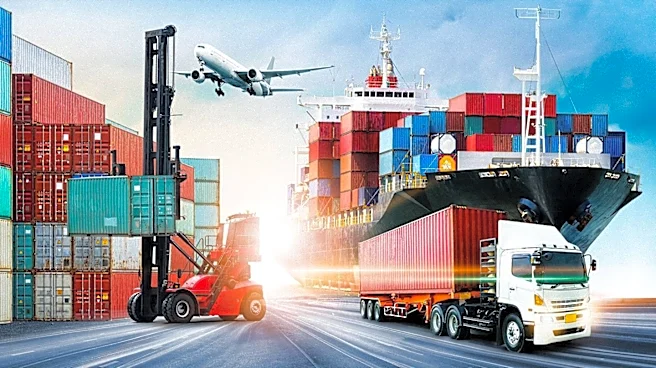
Miami International Airport (MIA) has announced its plan to deploy an AI-powered cargo community platform, making it the largest cargo airport globally to adopt such a system. Developed in collaboration with Kalé Logistics, the Airport Cargo Community
System (ACCS) aims to digitalize and streamline freight supply chain operations. This platform will connect various stakeholders, including freight forwarders, airlines, ground handlers, and trucking companies, replacing existing fragmented communication and manual processes. The initiative is projected to generate annual savings of up to US$250 million across the freight supply chain. MIA, which handled a record 3.4 million US tons of freight in 2025, expects the system to reduce truck congestion, accelerate cargo processing, and enhance resource planning. Ralph Cutié, Director and CEO of MIA, noted that the project is in its early stages, requiring significant stakeholder engagement, onboarding, and training before full deployment.
Why It's Important?
The implementation of an AI-powered cargo platform at MIA signifies a major step towards modernizing and optimizing logistics within the U.S. air cargo industry. The projected annual savings of US$250 million highlight the substantial economic benefits that can be realized through digital transformation, impacting various entities within the supply chain, from trucking companies to airlines. By reducing truck wait times, fuel consumption, and manual documentation, the system is expected to improve operational efficiency and reduce costs for businesses operating through MIA. This move could set a precedent for other large U.S. airports, encouraging broader adoption of AI and digital platforms to enhance competitiveness and address challenges like congestion and resource management in the increasingly complex global supply chain. The success of MIA's initiative could influence future investment and policy decisions regarding infrastructure and technology upgrades in the national aviation sector.
What's Next?
The next phase for MIA's AI-powered cargo platform involves extensive stakeholder engagement, onboarding, and training for all users within the cargo community. Amar More, Co-founder and CEO of Kalé Logistics, indicated that tangible results and the full realization of the projected savings are anticipated approximately one to one and a half years from now, once the system is fully rolled out and adopted. The platform will incorporate advanced AI tools, including a documentation agent using optical character recognition (OCR) to extract data from PDFs, predictive tools for estimating truck turnaround times, and an optimization agent for intelligent vehicle routing to loading docks. A multilingual generative AI chatbot will also be introduced to handle inquiries about shipment status and customs clearance, further reducing reliance on traditional communication methods. Future deployment phases are planned to include anomaly detection capabilities.
Beyond the Headlines
The adoption of an AI-first, API-first design philosophy at MIA reflects a broader trend towards integrating advanced technologies into critical infrastructure to enhance resilience and efficiency. This initiative goes beyond mere automation; it represents a strategic shift towards data-driven decision-making and predictive analytics in logistics. The emphasis on reducing human intervention in routine tasks, such as documentation and inquiry handling, could lead to a re-evaluation of workforce roles within the cargo industry, potentially shifting focus towards more analytical and oversight functions. Furthermore, the success of this platform could influence regulatory frameworks and industry standards for digital interoperability and data sharing across the U.S. and international cargo networks, fostering a more integrated and transparent global trade environment. The ethical implications of AI in decision-making and data privacy will also become increasingly relevant as such systems become more widespread.