





What's Happening?
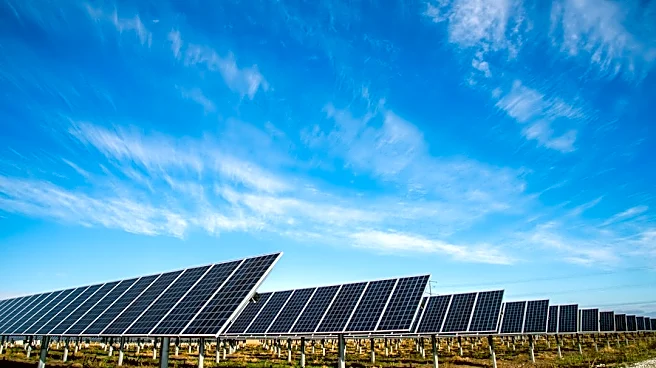
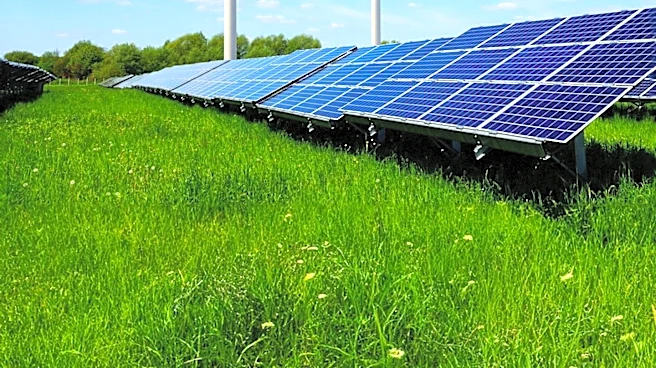
UK-based sustainable infrastructure investor Actis has re-entered Mexico's renewable energy sector by launching Yeltica Energy. This new greenfield platform aims to develop over 2GW of solar, wind, and storage capacity. Yeltica Energy's initial projects
include three solar-plus-storage facilities totaling approximately 330MWp of solar PV and 255MWh of battery storage, awarded under the first CFE Mixed Investment Tender. These projects are backed by 25-year, US-dollar-denominated, and inflation-indexed power purchase agreements with CFE. The launch aligns with Mexico's federal energy reforms under the Plan Mexico framework and the Power Sector Development Plan (PLADESE) 2025-2039, which projects a need for over 75GW of new generation capacity, with about 80% from clean energy sources, to meet rising industrial demand.
Why It's Important?
This development is crucial for Mexico's energy transition and economic growth. The launch of Yeltica Energy signifies a significant mobilization of private capital in the country's electricity sector, supporting the government's ambitious target to increase its renewable electricity share to 38% by 2030. The mandatory integration of battery energy storage systems (BESS) in awarded projects, equivalent to at least 30% of total generation capacity, addresses regional grid congestion and enhances grid stability. This investment will help meet the rising industrial demand driven by nearshoring trends, providing a reliable and sustainable power supply. It also creates strong opportunities for investors in Mexico, which is considered one of the most compelling infrastructure markets in Latin America due to increasing demand and a supportive policy framework.
What's Next?
Yeltica Energy plans to expand its portfolio by participating in future public tenders and through direct origination with developers and commercial buyers. The Mexican government, through SENER, anticipates requiring additional calls to meet the remaining 16,500MW target for the current administration, along with a separate private-sector call for 3GW. However, the execution of these projects faces operational and administrative hurdles, including saturation across General Transmission Networks (RGT) and potential delays from CENACE interconnection capacity allocations. Developers also contend with compressed regulatory permit application timelines and extended lead times for electrical equipment, such as transformers and switchgear, which can be up to 18 months. Addressing these challenges will be critical for meeting federal commercial operation deadlines.
Beyond the Headlines
The re-entry of Actis into Mexico's renewable sector, coupled with the government's policy framework, highlights a broader shift towards public-private partnerships in critical infrastructure development. The mandatory battery storage integration sets a precedent for future renewable projects, emphasizing grid reliability alongside clean energy generation. This approach could serve as a model for other developing economies seeking to balance rapid industrialization with sustainable energy practices. The challenges related to grid capacity and supply chain issues underscore the complexities of large-scale energy transitions, requiring coordinated efforts from policymakers, investors, and developers to ensure successful implementation and long-term benefits for the country's energy landscape and economy.