





What's Happening?
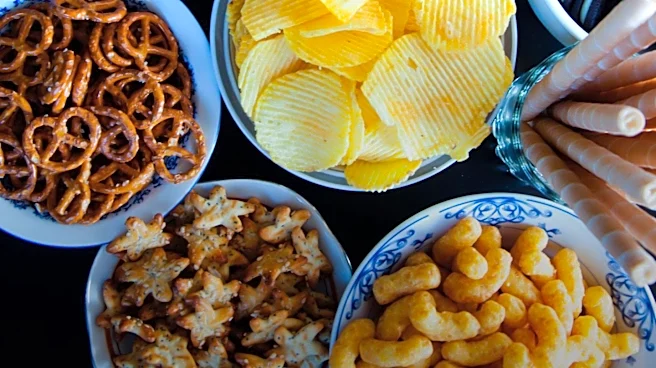
Many popular American snacks, such as Graham Crackers, Animal Crackers, Fig Newtons, Jell-O, Planters Peanuts, Hershey's Kisses, Oreos, Life Savers, Hostess CupCakes, Baby Ruth, Cheez-Its, Edy's Pie (formerly Eskimo Pie), Fritos, Lay's Potato Chips, Ritz
Crackers, M&M's, Goldfish, Pop-Tarts, Doritos, and Pringles, are significantly older than many consumers realize. Some of these snacks date back to the 19th century, with origins tied to diverse motivations, from dietary reforms to wartime rationing. For example, Graham crackers were initially conceived by a Presbyterian minister as part of a strict vegetarian diet to suppress 'carnal urges,' while M&M's were developed during the Spanish Civil War to create a chocolate that wouldn't melt in the heat. The article details the founding and evolution of these iconic treats, often highlighting their original names, inventors, and the cultural contexts of their introduction.
Why It's Important?
The enduring popularity and historical depth of these American snacks reflect significant aspects of U.S. consumer culture, industrial innovation, and marketing evolution. These products have not only shaped dietary habits but also become embedded in the national identity, often evoking nostalgia and comfort. Their longevity demonstrates successful adaptation to changing tastes and market demands, as well as the power of branding and distribution in creating household names. The stories behind these snacks also offer insights into broader historical trends, such as the development of mass production, the impact of advertising, and shifts in societal values, including the recent renaming of Eskimo Pie due to racially insensitive branding. Understanding their origins provides a richer context for appreciating the landscape of American food and business.
Beyond the Headlines
The historical narratives of these snacks reveal how seemingly simple food items can carry complex cultural and economic significance. The evolution of products like Graham crackers from a health food to a sweet treat, or the strategic development of M&M's for military use, illustrates the dynamic interplay between consumer demand, technological advancement, and societal needs. The article also touches upon the ethical considerations that have led to rebranding, such as the change from Eskimo Pie to Edy's Pie, reflecting a growing corporate responsibility towards inclusive language and historical sensitivity. This deeper look into snack history provides a lens through which to examine the ongoing dialogue about cultural appropriation, brand identity, and the continuous re-evaluation of historical practices in modern commerce.