







What's Happening?
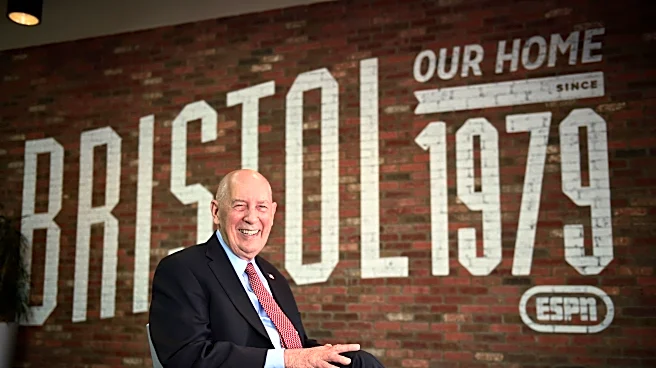
Bill Rasmussen, the visionary co-founder of ESPN, passed away on Tuesday at the age of 93 at his Florida home due to the effects of Parkinson’s disease. Rasmussen, who was diagnosed with the degenerative condition in 2014, conceived the groundbreaking
idea of a 24-hour sports network in 1979 after being fired from a public relations job. Alongside his son Scott, he developed the concept that would revolutionize American television viewing habits. ESPN chairman Jimmy Pitaro lauded Rasmussen as a 'remarkable man — a visionary and an innovator' whose passion and entrepreneurial spirit were fundamental to the network's creation. Despite being forced out of ESPN by majority owner Getty Oil just a year after its launch, Rasmussen's original vision for an all-sports channel, initially focused on Connecticut sports, expanded to a national audience through satellite technology. The network officially launched on September 7, 1979, with its first 'SportsCenter' broadcast and a live slow-pitch softball game.
Why It's Important?
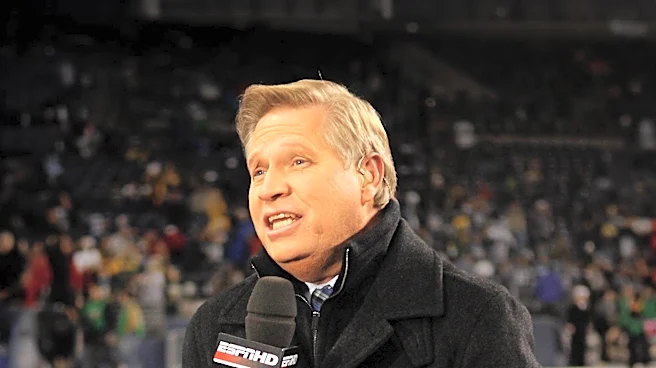
Bill Rasmussen's creation of ESPN fundamentally altered the landscape of sports and television in the United States. Before ESPN, dedicated 24-hour sports coverage was nonexistent, and his innovative approach transformed how Americans consumed sports content. The network's success demonstrated the viability of niche cable channels, paving the way for a proliferation of specialized programming across various genres. ESPN's continuous coverage elevated sports to a constant presence in American households, influencing sports culture, advertising, and the business models of professional leagues and collegiate athletics. His entrepreneurial spirit, born from a personal setback, exemplifies a classic American success story, proving that a bold idea could overcome skepticism and create an entirely new industry segment. The network's enduring legacy, as highlighted by veteran anchor Chris Berman, underscores Rasmussen's profound and lasting impact on media and sports.
What's Next?
While Bill Rasmussen's direct involvement with ESPN ended decades ago, his foundational vision continues to shape the network's operations and the broader sports media industry. His passing will likely prompt renewed reflection on ESPN's origins and its evolution, particularly as the media landscape continues to shift with streaming services and digital platforms. The principles of continuous, in-depth sports coverage that Rasmussen pioneered remain central to ESPN's identity and influence its strategic decisions moving forward. His story will continue to serve as an inspiration for media entrepreneurs and innovators, emphasizing the power of a singular vision to create a lasting institution. ESPN's ongoing efforts to adapt to new technologies and audience behaviors will invariably be built upon the revolutionary groundwork laid by Rasmussen.
Beyond the Headlines
Beyond the immediate impact on sports broadcasting, Bill Rasmussen's journey with ESPN highlights deeper themes of innovation, resilience, and the often-complex relationship between founders and the companies they create. His initial ousting from the network he founded, only to be embraced and recognized years later, speaks to the cyclical nature of corporate history and the eventual acknowledgment of pioneering contributions. This narrative underscores the importance of visionaries who challenge existing paradigms, even when their ideas are initially met with doubt. Rasmussen's story also reflects the broader American dream of turning a bold idea into a massive enterprise, demonstrating how individual ingenuity can lead to widespread cultural and economic transformation. His legacy is not just about sports, but about the power of an unconventional idea to reshape an entire industry.