







What's Happening?
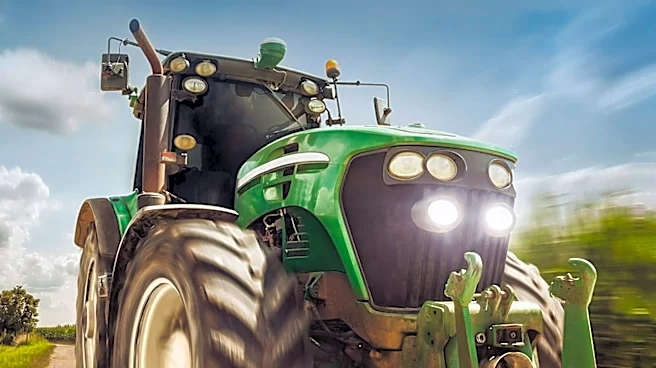
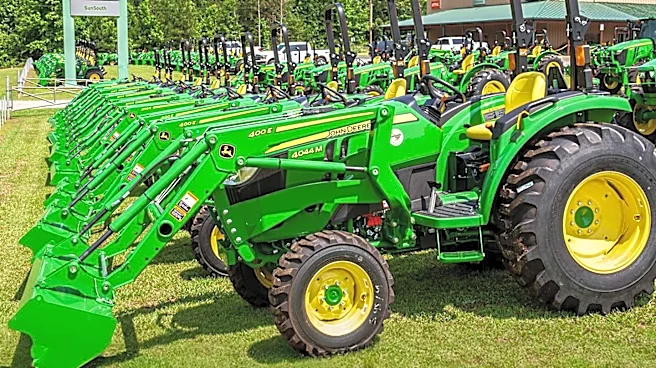
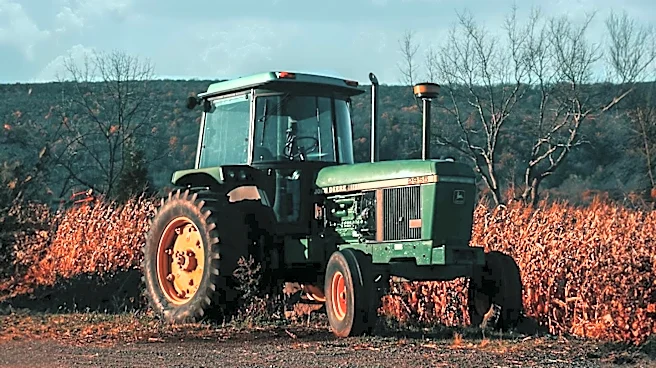
John Deere, a 190-year-old tractor manufacturer, is transforming into an advanced agricultural technology company, with a strategic focus on autonomous farming and artificial intelligence. The company's CEO, John May, outlined ambitions to achieve fully
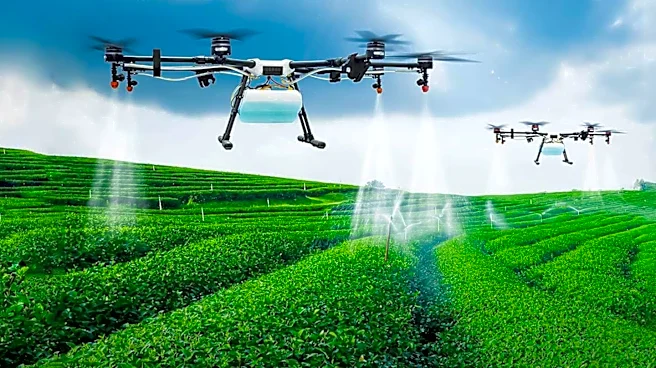
autonomous U.S. corn production by 2030. This initiative leverages AI-powered computer vision, which has already demonstrated significant results, including a 60% reduction in herbicide use. The shift also involves moving towards subscription-based farming technology, indicating a change in how farmers will access and utilize advanced agricultural tools. This technological evolution is part of John Deere's broader strategy to innovate within the agricultural sector, addressing challenges such as tough farm-income cycles and rebuilding trust with customers following past disputes, such as the 'right to repair' issue. The company's leadership emphasizes a customer-first philosophy, rooted in May's rural upbringing.
Why It's Important?
This strategic pivot by John Deere holds significant implications for the U.S. agricultural industry, particularly for corn farmers. The widespread adoption of autonomous tractors and AI-powered systems could lead to increased efficiency, reduced labor costs, and more sustainable farming practices through precise resource management, such as optimized herbicide application. This could enhance the competitiveness of U.S. corn production on a global scale. However, the shift to subscription-based technology models could alter farmers' financial structures, potentially increasing recurring costs and raising concerns about data ownership and control over their equipment. The 'right to repair' issue, previously a point of contention, highlights the importance of maintaining farmer autonomy and access to repair information and tools, which will be crucial for the successful integration of these advanced technologies. The move also positions John Deere as a leader in agricultural technology, potentially influencing other manufacturers to follow suit and accelerating the modernization of farming practices across the nation.
What's Next?
John Deere is expected to continue developing and deploying its autonomous farming technologies, with a clear target of achieving fully autonomous U.S. corn production by 2030. This will likely involve further advancements in AI-powered computer vision, sensor technology, and robotics. The company will also need to refine its subscription-based service models to ensure they are economically viable and appealing to farmers, while addressing any lingering concerns about equipment access and repair. There may be ongoing discussions and potential policy developments related to the 'right to repair' in the context of increasingly complex and software-dependent agricultural machinery. Farmers will need to evaluate the costs and benefits of adopting these new technologies, including potential training requirements and infrastructure upgrades. The success of John Deere's initiative could also spur increased investment and innovation from competitors in the agricultural technology sector, leading to a more competitive market for autonomous farming solutions.
Beyond the Headlines
The move towards fully autonomous farming by John Deere raises deeper questions about the future of agricultural labor and the socio-economic landscape of rural America. While automation promises increased efficiency, it could also lead to a reduction in the demand for manual labor in farming, potentially impacting rural employment. The reliance on AI and subscription services also brings forth ethical considerations regarding data privacy, algorithmic bias in decision-making, and the potential for technological dependence. The 'right to repair' dispute underscores a broader tension between manufacturers' intellectual property rights and consumers' ability to maintain and repair their own equipment, a debate that extends beyond agriculture into various technology-driven industries. Furthermore, the environmental benefits of reduced herbicide use, while positive, must be balanced against the energy consumption and carbon footprint associated with manufacturing and operating advanced autonomous machinery. This technological shift represents a fundamental redefinition of farming, moving it closer to a high-tech, data-driven industry.