



What's Happening?
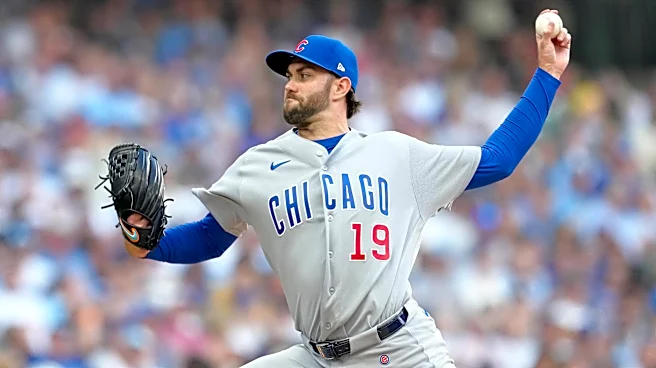
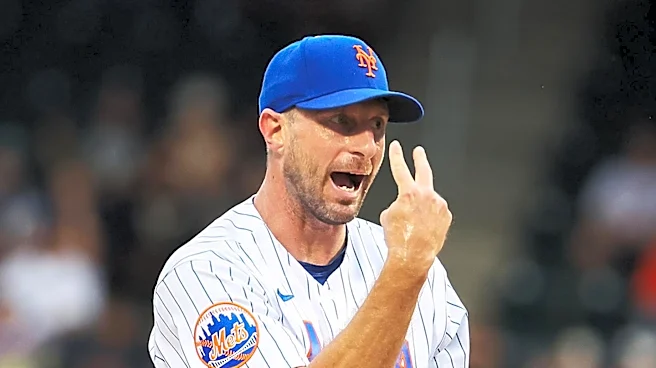
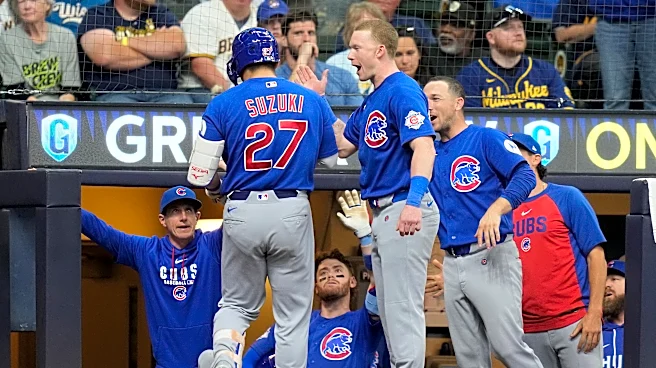
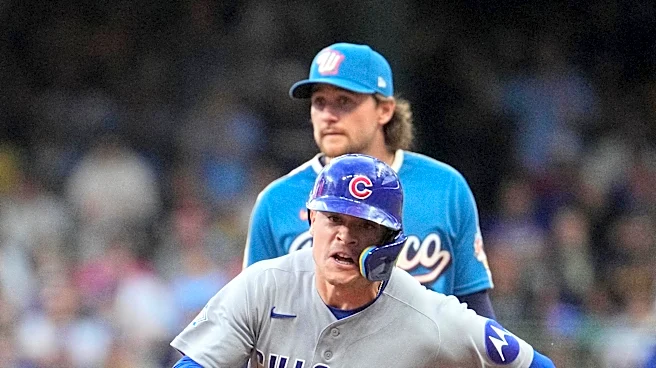
David Peterson, recently acquired by the Chicago Cubs from the New York Mets, made a strong debut against the Milwaukee Brewers. Despite a rocky start, giving up a home run on his first pitch, Peterson settled in to allow only two runs over 5 2/3 innings,
contributing to the Cubs' 8-2 victory. This performance comes as a relief for the Cubs, who are dealing with an injury-riddled rotation. Peterson's addition is seen as a strategic move to stabilize the pitching lineup, with his recent uptick in velocity and ground ball generation being key factors in his acquisition. The Cubs' management and coaching staff are optimistic about his potential impact, especially with the team's defense supporting him.
Why It's Important?
Peterson's successful debut is crucial for the Cubs as they navigate a challenging season with multiple injuries affecting their starting pitchers. His performance not only provides immediate relief but also offers hope for the team's playoff aspirations. The Cubs are currently trailing in the NL Central, and bolstering their rotation is essential to closing the gap with division leaders. Peterson's ability to adapt and perform under pressure could be a turning point for the Cubs, potentially influencing their strategy in upcoming games and the trade market. His integration into the team highlights the importance of strategic acquisitions in maintaining competitive edge in Major League Baseball.
What's Next?
Looking ahead, the Cubs will likely continue to rely on Peterson to deliver consistent performances as they aim to climb the standings. The team's management may also explore additional trades to further strengthen the rotation, especially if Peterson's success continues. Monitoring the recovery of other injured pitchers will be crucial, as their return could significantly impact the team's dynamics. The Cubs' ability to maintain momentum and capitalize on Peterson's debut will be key in their pursuit of a playoff spot.