


What's Happening?
Following the Skydance-Paramount merger, significant leadership changes are underway within the combined television operations. George Cheeks, a former co-CEO of Paramount Global, is reportedly poised to assume an expanded oversight role across the entire
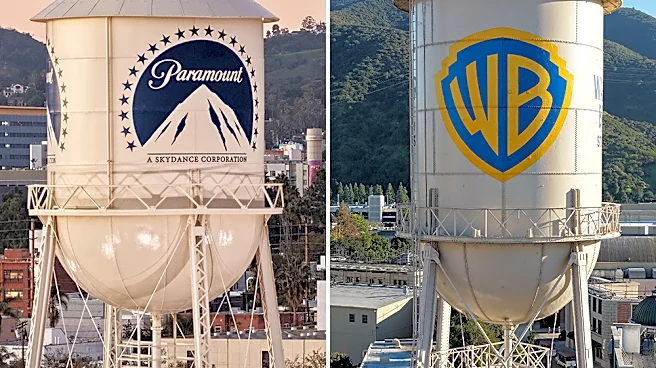
television empire under Skydance. This move signals a strategic shift towards a lean, hyper-focused operating structure. The integration of major television studios, including Warner Bros. TV, CBS Studios, and Paramount TV Studios, presents a complex challenge. These studios, responsible for numerous successful series, will need to align under the new corporate vision. The future roles of other prominent executives, such as Channing Dungey, who leads Warner Bros. TV Group, are also under scrutiny, with industry speculation about how two titan executives will be accommodated within the new structure. The merger aims to streamline operations and maximize value from both linear and streaming platforms, indicating a departure from previous 'bloated media management' practices.
Why It's Important?
This leadership reshuffle and strategic consolidation are critical for the future direction of the U.S. television industry. The potential appointment of George Cheeks to a broad oversight role indicates a preference for seasoned network and studio operators who understand how to extract maximum value from diverse content distribution channels. This move could lead to a more unified approach to content creation and distribution across the merged entities, potentially impacting the types of shows produced and the talent involved. The integration of multiple legacy studios, each with distinct creative cultures and operational methods, will determine whether Skydance can successfully achieve synergy or if it will face internal resistance. The outcome of this consolidation will serve as a blueprint for how other legacy Hollywood companies might need to adapt to survive in the competitive streaming age, emphasizing operational reliability and a clear macro-strategy over fragmented leadership.
What's Next?
The coming weeks are expected to bring final structural announcements regarding the combined television apparatus. Key decisions will be made on whether individual studio labels like CBS Studios and Warner Bros. TV will maintain their distinct creative autonomy or if they will undergo massive consolidation to streamline operations. The reporting lines for studio heads such as Brett Paul, Clancy Collins White, David Stapf, and Matt Thunell will be clarified. The industry will closely watch the roles assigned to executives like Channing Dungey and how her leadership at Warner Bros. TV Group integrates with Cheeks's expanded responsibilities. These decisions will shape the creative output and operational efficiency of the new Skydance television empire, influencing content development, production budgets, and distribution strategies across linear television and streaming platforms. The focus will be on creating a unified, efficient system that can deliver consistent value in a rapidly evolving media landscape.
Beyond the Headlines
The Skydance-Paramount merger's impact on television leadership goes beyond corporate restructuring; it reflects a broader shift in Hollywood's power dynamics. The emphasis on 'ruthless efficiency' and a 'lean, hyper-focused operating structure' suggests a future where institutional memory and operational reliability are highly valued, potentially at the expense of traditional creative autonomy. The challenge of integrating diverse creative cultures from legacy studios raises ethical questions about preserving artistic integrity within a consolidated corporate framework. This consolidation could lead to a more centralized decision-making process for content, potentially limiting the diversity of voices and narratives in television. The 'illusion of separation' for individual studio labels, while answering to a singular financial engine, highlights the tension between maintaining brand identity and achieving corporate synergy. Ultimately, this reshuffling could redefine the career paths for media executives and creative talent, as the industry prioritizes adaptability and alignment with a broader macro-strategy.