








What's Happening?
OMA and Potato Head have collaborated to open the Good Times General Store in Bali, Indonesia, a retail space designed to integrate consumption with craftsmanship and material experimentation. Located within Desa Potato Head in Seminyak, the store functions
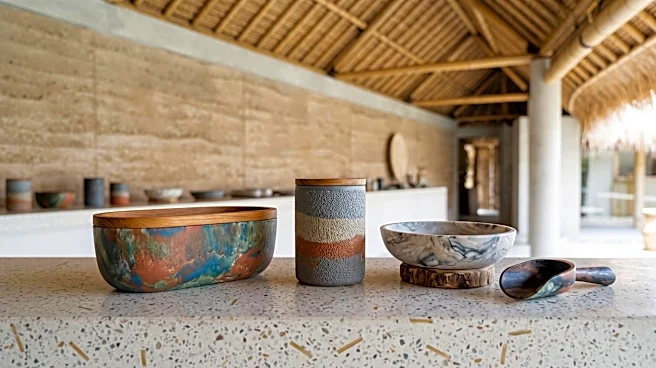
as both a retail outlet for Indonesian-made objects, fashion, and furniture, and a craft center offering hands-on workshops. The initiative aims to educate visitors on the origins of materials, manufacturing processes, and the lifecycle of products. The building itself reflects this philosophy, incorporating Balinese construction traditions with an alang-alang thatch facade, rammed-earth walls made from local clay, reclaimed wood, and terrazzo floors featuring recycled bamboo offcuts. The interior is organized into five interconnected bays, showcasing artisan products, Potato Head's collections, and the 'Wasted' collection by Max Lamb, which transforms discarded plastics into functional items. Additionally, the store includes a natural dye studio utilizing plant and food waste, and a workshop dedicated to plastic molding and material experimentation using shredded HDPE plastic recovered from Bali and Java. Future plans include ateliers for weaving, upcycling, and sewing by 2027.
Why It's Important?
This project is significant as it redefines the traditional retail experience by integrating principles of circular design and sustainability directly into the consumer interaction. By allowing customers to witness and participate in the creation and repurposing of goods, it fosters a deeper understanding of product lifecycles and the impact of consumption. This model challenges conventional retail by prioritizing education and engagement over mere transaction, potentially influencing consumer behavior towards more mindful purchasing decisions. The use of local and reclaimed materials in the building's construction also serves as a tangible example of sustainable architecture, demonstrating how waste can be transformed into valuable resources. For the design and hospitality industries, it offers a blueprint for creating immersive, eco-conscious environments that promote local craftsmanship and waste reduction. The initiative also supports local artisans and upcyclers by integrating their work and materials into a prominent commercial space, thereby contributing to local economies and sustainable practices.
What's Next?
The Good Times General Store plans to expand its workshop offerings with additional ateliers for weaving, upcycling, and sewing by 2027, further deepening its commitment to hands-on education and material reuse. The program will continue to evolve, suggesting a dynamic approach to integrating new crafts and sustainable practices. This initiative is also connected to Potato Head’s existing sustainability infrastructure, including the Waste Lab and the Follow the Waste Tour, indicating a broader, integrated strategy for waste management and resource repurposing within the resort. The success of this model could inspire other retail and hospitality brands to adopt similar circular design principles, potentially leading to a wider shift in how products are made, sold, and perceived. Future developments may include collaborations with more designers and artisans focused on sustainable materials and production methods, further solidifying its role as a hub for eco-conscious design and consumption.
Beyond the Headlines
Beyond its immediate retail and educational functions, the Good Times General Store represents a broader cultural shift towards valuing process and sustainability over pure consumption. It challenges the prevailing 'take-make-dispose' economic model by demonstrating a viable alternative rooted in circularity and resourcefulness. This approach has ethical implications, encouraging consumers to consider the environmental and social impact of their purchases. Legally, such initiatives could influence future regulations regarding waste management and sustainable manufacturing, potentially pushing for more stringent standards in product design and material sourcing. Culturally, it promotes a return to craftsmanship and appreciation for handmade goods, fostering a connection between consumers and the origins of their possessions. In the long term, this model could contribute to a more resilient and sustainable economy, where waste is minimized, resources are maximized, and consumer choices are driven by a deeper understanding of ecological responsibility.