




What's Happening?
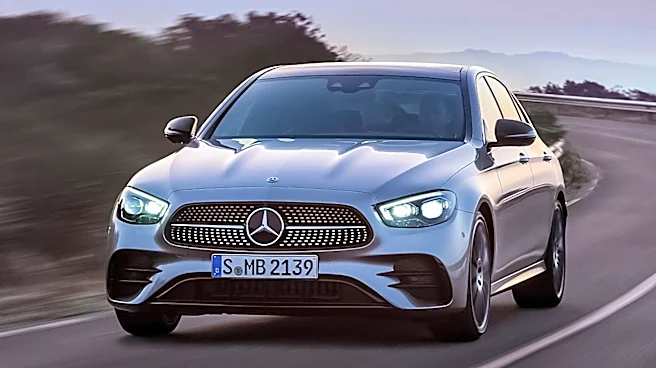
Mercedes-Benz AG, a prominent German luxury carmaker, announced a continued decline in its core car business sales during the third quarter. The company reported an 8% year-on-year decrease in car deliveries, totaling 407,200 units for the July-September
period. This downturn is primarily attributed to challenging market conditions, particularly in China, where sales saw a significant 31% drop to 86,800 units compared to the same period last year. Despite the overall decline in traditional car sales, Mercedes-Benz experienced a notable increase in the sales of battery-electric vehicles (BEVs), which include both cars and vans. BEV sales rose by 52% to 78,100 units during the same quarter, indicating a shift in consumer preference towards electric mobility. Mercedes-Benz is recognized as a leading global supplier of premium and luxury cars and vans, also offering financing, leasing, and car services.
Why It's Important?
This sales report from Mercedes-Benz highlights the evolving dynamics within the global automotive industry, particularly the luxury segment. The substantial decline in core car sales, especially in a key market like China, underscores the impact of economic headwinds and changing consumer behaviors on established automakers. China's market performance is a critical indicator for global luxury brands, and a 31% drop suggests broader economic pressures or increased competition within that region. Conversely, the robust 52% growth in battery-electric vehicle sales signals a significant acceleration in the adoption of electric mobility. This trend is crucial for the U.S. market as well, as it influences investment in charging infrastructure, regulatory policies favoring EVs, and the competitive landscape for domestic and international manufacturers. For U.S. consumers, it could mean a wider array of electric luxury vehicle options and potentially more competitive pricing as manufacturers scale up EV production. The shift also impacts the supply chain for automotive components, favoring those involved in EV technology.
What's Next?
Mercedes-Benz will likely continue to focus on its electrification strategy, given the strong growth in battery-electric vehicle sales. The company may implement new incentives or marketing strategies to address the declining sales in its core car business, particularly in the Chinese market. This could involve introducing new models, adjusting pricing, or enhancing customer experiences to stimulate demand. For the broader automotive industry, these trends suggest that other luxury car manufacturers may also face similar challenges in traditional internal combustion engine vehicle sales while seeing growth in their EV segments. This could lead to increased investment in EV research and development, expanded production capacities, and a more aggressive push towards electric vehicle adoption globally. Policy makers in the U.S. may observe these trends as they consider future regulations and incentives related to vehicle emissions and electric vehicle infrastructure development.
Beyond the Headlines
The sales figures from Mercedes-Benz reflect a deeper, ongoing transformation within the automotive sector, moving beyond just a shift in product offerings. The significant decline in traditional car sales, juxtaposed with the surge in EV sales, points to a fundamental change in consumer values and environmental consciousness. This shift has profound implications for the long-term viability of traditional automotive manufacturing processes and supply chains. It also raises questions about the future of luxury branding, as the definition of 'luxury' increasingly incorporates sustainability and advanced technology. The challenges in the Chinese market could also indicate a broader economic slowdown or increased nationalism in consumer preferences, which could affect other global brands. Furthermore, the rapid adoption of BEVs could accelerate the obsolescence of fossil fuel infrastructure and necessitate a complete overhaul of service and maintenance models for vehicles, impacting a wide range of related industries and employment sectors.