


What's Happening?
A 714-square-foot condo in Seattle, located in a building that was originally an elementary school built in 1896, has been designed to feel both inviting and spacious. The owner, Molly Hatia, focused on honoring the building's historic nature by incorporating
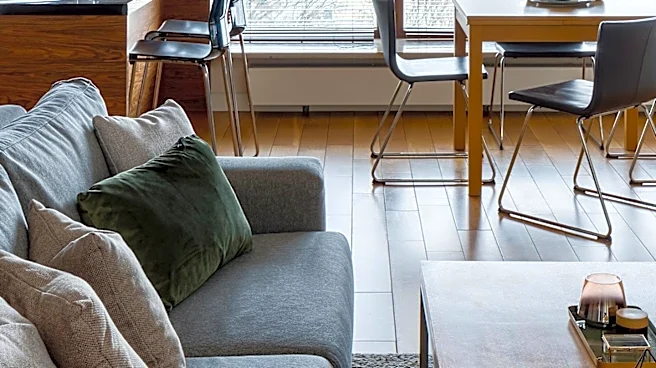
vintage elements such as a school desk and a classroom map purchased from a local antique store. The condo features large windows and 13-foot ceilings, which contribute to its grand feel despite its modest size. Molly undertook full renovations of the bathroom and kitchen, adhering to a Victorian/Edwardian-era style with design choices like vintage sink faucets and classic subway and mosaic tiles. An exposed brick wall in the bathroom further highlights the building's original character. The living room, Molly's favorite space, includes furniture from brands like Article and BoConcept, along with IKEA items and Pottery Barn throw pillows. The space also boasts a 'jungle oasis' of tropical houseplants, thriving due to the abundant natural light from the large windows.
Why It's Important?
This approach to small-space living in a historic building offers a significant model for urban development and residential design in the U.S. It demonstrates how older structures can be repurposed and modernized while preserving their unique heritage, providing character-rich housing options in dense urban areas like Seattle. The integration of vintage and contemporary design elements showcases a growing trend in interior design that values sustainability and individuality over purely modern aesthetics. For residents, this type of living space offers a blend of historical charm and modern convenience, potentially appealing to those seeking unique homes with a story. Economically, the successful renovation and styling of such properties can increase their market value and contribute to the revitalization of historic neighborhoods, attracting investment and tourism. Furthermore, the emphasis on maximizing natural light and incorporating greenery highlights a broader societal shift towards well-being and biophilic design in urban environments.
What's Next?
The success of this Seattle condo in blending historical preservation with modern small-space living could inspire similar renovation projects in other U.S. cities with historic buildings. Developers and homeowners might increasingly look to repurpose older structures, leading to a rise in demand for specialized architectural and interior design services focused on historical restoration and compact living solutions. This trend could also influence urban planning policies, encouraging cities to offer incentives for preserving and adapting historic properties rather than demolishing them. Additionally, the design choices, such as incorporating vintage items and maximizing natural light, may become more prevalent in mainstream interior design, influencing furniture retailers and decor trends. The focus on creating 'jungle oases' within urban dwellings suggests a continued growth in the popularity of indoor plants and biophilic design, potentially leading to more businesses catering to this niche.
Beyond the Headlines
Beyond its aesthetic appeal, this condo represents a deeper cultural shift towards valuing authenticity and history in personal spaces. In an increasingly standardized world, living in a former schoolhouse offers a unique narrative and connection to the past, fostering a sense of identity and rootedness for its inhabitants. This trend challenges the conventional notion that new construction is always superior, instead highlighting the inherent value and character found in older buildings. Ethically, it promotes sustainable living by repurposing existing structures and reducing the environmental impact associated with new builds. The careful balance between preserving historical integrity and introducing modern comforts also reflects a broader societal dialogue about how to honor the past while adapting to contemporary needs. This approach could lead to a re-evaluation of what constitutes 'luxury' in urban living, shifting focus from sheer size to unique character, thoughtful design, and historical significance.