
What's Happening?
Former NBA player Iman Shumpert recently sparked an online debate by claiming that Kevin Durant's decision to join the Golden State Warriors in 2016 cost Shumpert and the Cleveland Cavaliers two NBA championship
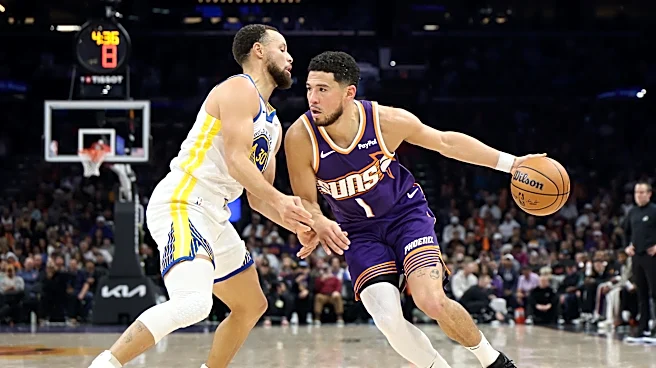
rings. Shumpert, during an episode of 'Gil’s Arena,' stated that Durant joined a team that 'didn’t need' him, implying that the Warriors were already a dominant force. Durant's move to Golden State followed the Warriors' historic 73-win regular season and their formidable trio of Stephen Curry, Klay Thompson, and Draymond Green. Curry had been named MVP, Thompson was All-NBA Third Team, and Green was a top-10 MVP vote-getter. Durant, a two-time MVP himself, was also a top talent, averaging 28.2 points, 8.2 rebounds, and 5.0 assists in the 2015-2016 season. After Durant joined, the Warriors won two consecutive NBA titles, with Durant earning NBA Finals MVP in both series. The Cavaliers were their opponents in four consecutive NBA Finals, winning in 2016 before Durant's arrival, but losing the subsequent two series.
Why It's Important?
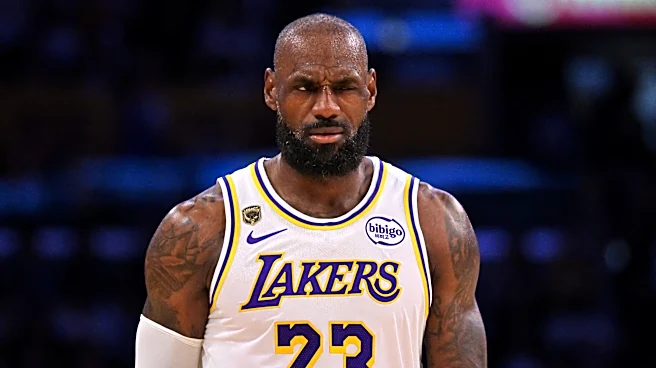
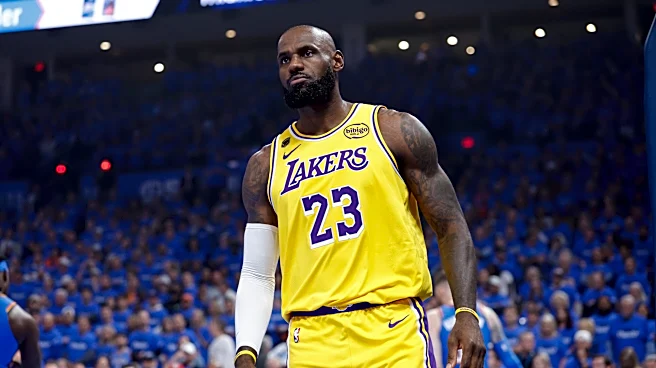
This debate highlights a significant 'what-if' scenario in recent NBA history and touches upon the broader discussion of player movement and its impact on competitive balance. Durant's decision to join an already powerhouse team like the Warriors was controversial at the time, with many critics arguing it created an 'unbeatable' superteam. The success of the Warriors with Durant, securing two championships and two Finals MVP awards for him, undeniably altered the landscape of the NBA. It also raises questions about the legacy of players who join established championship contenders versus those who build teams from the ground up. For the Cavaliers, particularly LeBron James, Durant's presence meant facing an even more formidable opponent, potentially impacting their championship aspirations and overall historical record. The discussion underscores the intense scrutiny and fan engagement surrounding player decisions and their long-term implications for team dynasties and individual legacies.
What's Next?
The debate initiated by Iman Shumpert is likely to continue to fuel discussions among NBA analysts, former players, and fans regarding the historical context of the Golden State Warriors' dynasty and Kevin Durant's role in it. While the past cannot be changed, such conversations often influence how current and future player movements are perceived. It could also lead to further reflections on the competitive integrity of the league when star players opt to join already dominant teams. For current players, this historical debate might serve as a point of reference when considering their own free agency decisions, weighing the pursuit of championships with the perception of their individual contributions and legacy. The ongoing nature of these discussions ensures that the 'what-if' scenarios of NBA history remain a vibrant part of sports commentary.
Beyond the Headlines
Beyond the immediate debate, this discussion delves into the ethical and philosophical considerations of 'superteams' in professional sports. It questions whether such formations diminish the competitive spirit of the game or if they are simply a natural evolution of player agency and strategic team building. The concept of a player joining a team that 'didn't need' them, as Shumpert suggests, touches on the idea of earned success versus inherited success. It also highlights the emotional investment of players and fans in the outcome of championships and the narratives surrounding them. The long-term implications include how future generations will view this era of NBA basketball and the legacies of its key figures, particularly in an age where player empowerment and team-hopping are increasingly common. This conversation contributes to the ongoing narrative of how individual choices can profoundly shape the collective history of a sport.