





What's Happening?
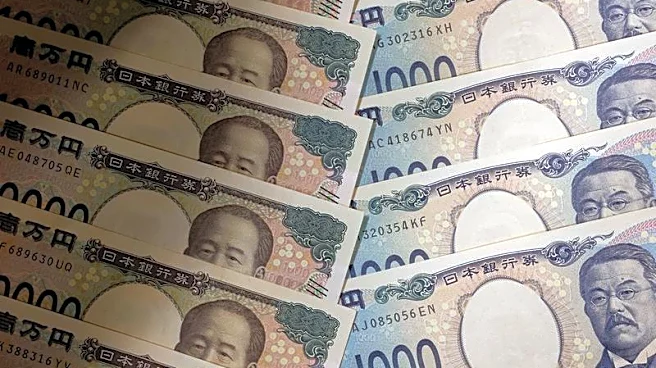
Bank of Japan Governor Kazuo Ueda has strengthened expectations for a 25-basis-point interest rate hike at the bank's December meeting, which would be the third such increase this year. Market pricing indicates an 85% probability of this move, bringing
the policy interest rate to 1.50%. Ueda downplayed weak third-quarter consumption spending, stating that the decline was largely anticipated and that household spending is expected to recover. He also reiterated that financial conditions in Japan remain loose and warned that a weakening yen could contribute to inflationary pressures. This stance comes as Japan's Finance Minister Satsuki Katayama cautioned against rapid, one-sided currency movements and affirmed continued coordination with the U.S. Treasury Department.
Why It's Important?
The Bank of Japan's anticipated rate hike and Governor Ueda's hawkish stance have significant implications for global financial markets, including the U.S. A tightening monetary policy in Japan could lead to a stronger yen, potentially impacting the competitiveness of Japanese exports and the cost of imports for U.S. businesses. Furthermore, as the Federal Reserve signals aggressive rate hikes, a divergence in monetary policy between major economies like Japan and the U.S. can influence capital flows and currency valuations. U.S. investors with holdings in Japanese assets or those engaged in international trade will need to monitor these developments closely, as changes in interest rates and currency strength can affect investment returns and operational costs. The coordination between Japan's Finance Ministry and the U.S. Treasury Department also highlights the interconnectedness of global financial stability.
What's Next?
The market is largely anticipating a 25-basis-point rate hike by the Bank of Japan at its December meeting. Following this, attention will turn to Governor Ueda's subsequent statements and the bank's future guidance on monetary policy, particularly concerning any further adjustments to the degree of monetary accommodation. The impact of yen weakness on inflation will be a key factor influencing future decisions. Additionally, the ongoing coordination between Japan's Finance Minister and the U.S. Treasury Department regarding currency movements will be closely watched for any potential joint interventions or policy statements. Market participants will also monitor upcoming economic data releases, such as inflation reports and consumption figures, to gauge the effectiveness of the Bank of Japan's policies and the overall health of the Japanese economy.
Beyond the Headlines
The Bank of Japan's move towards tightening monetary policy, even as it downplays some economic indicators, reflects a broader global shift among central banks to combat inflation. This could signal a departure from Japan's long-standing ultra-loose monetary policy, potentially leading to a re-evaluation of global investment strategies. The caution regarding yen weakness and its inflationary impact underscores the delicate balance central banks must maintain between supporting economic growth and controlling price stability. For the U.S., a stronger yen could make Japanese goods more expensive, potentially shifting consumer demand towards domestic products or goods from other countries. This situation also highlights the increasing complexity of international economic relations, where domestic policy decisions in one major economy can have ripple effects across global trade, investment, and currency markets, necessitating ongoing international dialogue and coordination.