






What's Happening?
The New York City real estate market is currently offering a variety of apartments priced under $1 million across different boroughs. In Jackson Heights, a two-bedroom unit at Laburnum Court, a garden cooperative built in 1922, is listed for $775,000.
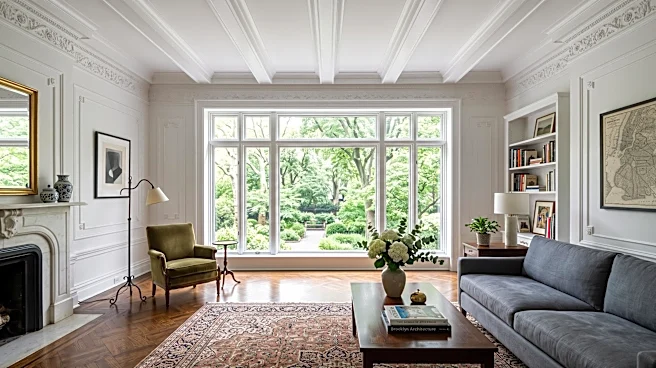
This top-floor apartment features original doorknobs, parquet floors, a wood-burning fireplace, and a renovated kitchen with modern appliances. Monthly fees are $1,397, covering landscaping, shared laundry, bicycle storage, and a live-in superintendent. In the West Village, a one-bedroom co-op at 135 Perry St., priced at $795,000, offers a railroad layout with triple exposures, including south-facing views of a cobblestone street and western exposures for evening light. It boasts a spa-inspired bathroom with rose marble and a soaking tub, with monthly fees of $1,657. Brooklyn Heights presents a prewar one-bedroom at 155 Henry St. for $775,000, featuring high beamed ceilings, picture-frame moldings, and east-facing windows overlooking the Monroe Place Courthouse gardens. Its monthly fees are $1,228, including shared laundry, a bike room, and a live-in superintendent. Additionally, a renovated 600-square-foot studio in Greenwich Village at 101 W. 12th St. is available for $749,000, offering skyline views, stainless-steel kitchen appliances, and a modern bathroom, with monthly fees of $1,692 covering a full-time doorman, concierge, and live-in super.
Why It's Important?
The availability of apartments under $1 million in diverse and desirable New York City neighborhoods highlights ongoing dynamics in the urban real estate market. For prospective homeowners, these listings represent opportunities to enter or upgrade within a competitive market, potentially offering more space or amenities than typically expected at this price point in NYC. The varying monthly fees, which include amenities like landscaping, laundry, and superintendent services, are a significant factor for buyers, impacting the overall affordability and long-term cost of ownership. The presence of prewar buildings with historical charm, such as those in Jackson Heights and Brooklyn Heights, also underscores the enduring appeal of classic architecture and established communities. Conversely, the high monthly fees in some areas, like the West Village and Greenwich Village, indicate the premium associated with prime locations and comprehensive building services, which can be a barrier for some buyers despite the sub-million-dollar purchase price. This market segment reflects a balance between historical value, modern renovations, and the persistent demand for urban living.
What's Next?
The continued offering of diverse properties under $1 million suggests that the New York City real estate market remains dynamic, with opportunities for various buyer profiles. Potential buyers will likely continue to weigh factors such as location, prewar charm versus modern amenities, and the impact of monthly fees on their overall budget. The market may see sustained interest in these properties, particularly those offering unique features like garden access or significant renovations. Real estate agents and developers will likely monitor demand for these price points and property types to inform future listings and developments. The ongoing balance between property value, maintenance costs, and neighborhood desirability will continue to shape purchasing decisions in these competitive urban environments.
Beyond the Headlines
The presence of these sub-$1 million listings in New York City also reflects broader socio-economic trends, including the evolving definition of affordability in one of the world's most expensive cities. While these prices are still substantial, they represent a more accessible entry point compared to the city's median home prices. The emphasis on features like renovated kitchens, spa-inspired bathrooms, and prewar details suggests a consumer demand for quality and character, even within more budget-conscious segments. The inclusion of amenities in monthly fees, such as live-in superintendents and shared facilities, points to a communal living aspect that is often integral to urban co-op and condo living. This market segment also highlights the architectural diversity of NYC, from garden cooperatives to prewar buildings with unique historical elements, contributing to the city's rich urban fabric and offering distinct lifestyle choices for residents.