


What's Happening?
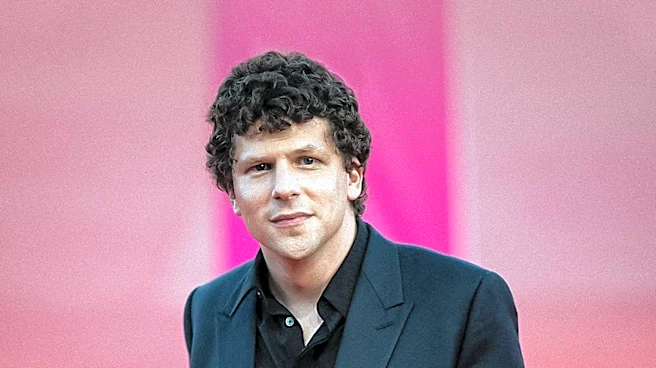
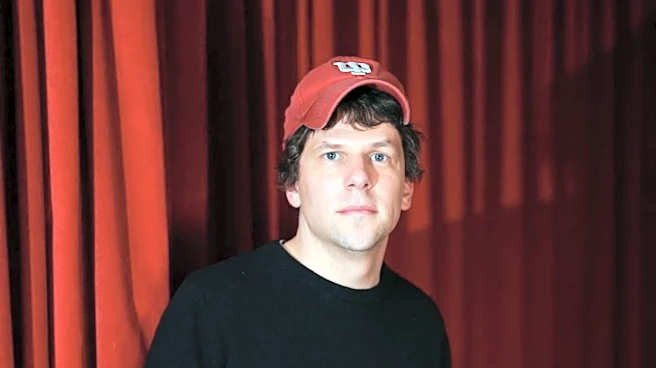
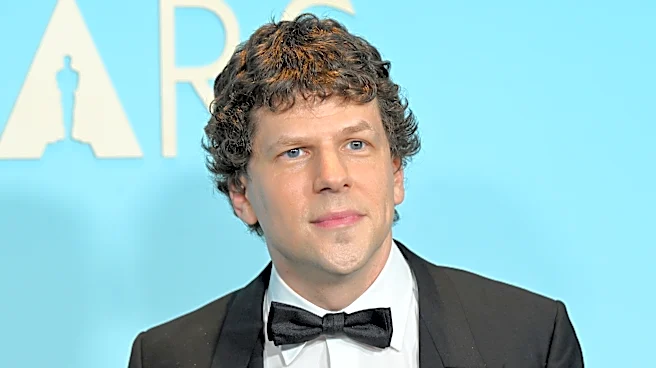
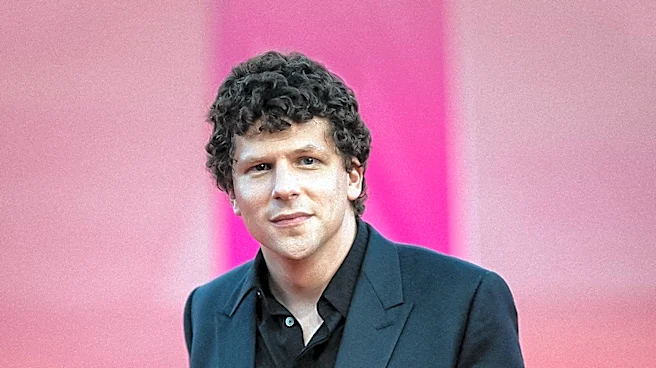
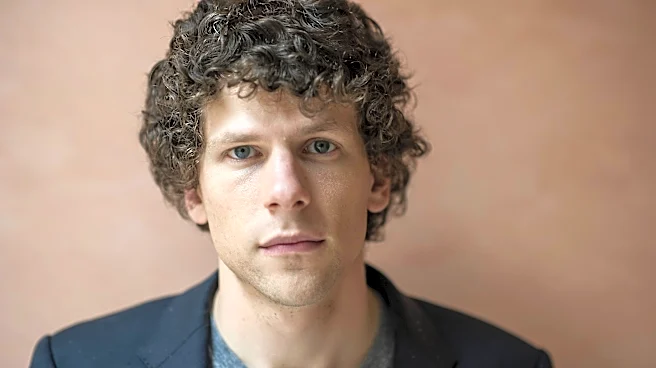
Jesse Eisenberg, known for his acting, directing, writing, and producing, recently shared insights into his public interactions and the nature of his roles in Hollywood. In an interview with The New Yorker, Eisenberg stated that fans generally treat him
well because his work is not sexualized. He elaborated that his life differs from actors whose onscreen personas lead the public to desire them sexually. Eisenberg, who often writes scripts at the New York Public Library, noted that people mostly respect his privacy. He recounted an instance where a fan mistakenly complimented his 'website,' a reference to his role as Mark Zuckerberg in 'The Social Network,' which he found uncomfortable. Eisenberg declined to reprise his role as Zuckerberg in the sequel, 'The Social Reckoning,' with Jeremy Strong taking over the part. His new film, 'The Debut,' featuring Julianne Moore, Paul Giamatti, Halley Bailey, Colton Ryan, and Bernadette Peters, is set to open on December 11.
Why It's Important?
Eisenberg's comments highlight a significant aspect of celebrity culture and the impact of public perception on actors' personal lives. His distinction between sexualized and non-sexualized roles sheds light on the varying degrees of intrusion and objectification celebrities face. This perspective is crucial for understanding the psychological toll of fame, particularly in an era where social media blurs the lines between public and private life. For the entertainment industry, it raises questions about the types of roles offered to actors and the potential consequences for their well-being. Eisenberg's decision to decline a sequel role further underscores an actor's agency in managing their career trajectory and public image, potentially influencing other performers to prioritize personal boundaries over commercial opportunities. The discussion also touches upon the fan-celebrity dynamic, illustrating how misinterpretations or overfamiliarity can create awkward or distressing situations for public figures.
What's Next?
As 'The Debut' prepares for its December 11 release, Eisenberg's recent interview may draw additional attention to his work and his nuanced views on fame. The film's reception could further solidify his reputation as a versatile artist who prioritizes creative integrity and personal boundaries. His candidness might also spark broader conversations within the entertainment industry about the treatment of actors and the pressures associated with certain types of roles. Other actors and industry professionals might be encouraged to share their own experiences, potentially leading to a more open dialogue about the psychological impacts of celebrity. Furthermore, the discussion could influence how future roles are cast and promoted, with a greater emphasis on the long-term well-being of performers. The public's reaction to his statements will also be a key indicator of evolving attitudes towards celebrity and privacy.
Beyond the Headlines
Eisenberg's reflections delve into the deeper ethical and cultural implications of how society consumes and interacts with celebrity. His experience with fans, particularly the 'drunk guy' incident, illustrates the dehumanizing effect that can occur when public figures are reduced to their onscreen personas. This phenomenon is exacerbated by the pervasive nature of media, where the line between character and individual often blurs. The conversation also touches upon the power dynamics inherent in fan-celebrity relationships, where the public's perceived ownership of a star can lead to inappropriate behavior. From a broader cultural perspective, Eisenberg's stance challenges the conventional expectation for actors to embrace all aspects of fame, including its more intrusive elements. His choice to prioritize his personal comfort and artistic integrity over a high-profile sequel role could inspire a shift in how actors navigate their careers, fostering a greater emphasis on mental health and personal boundaries within the demanding world of Hollywood.