






What's Happening?
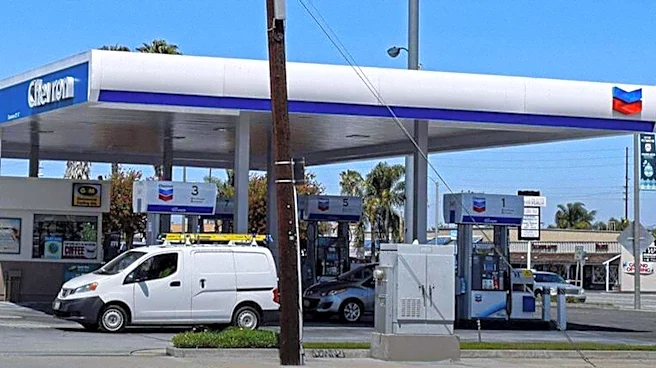
Libya's National Oil Corporation (NOC) concluded its first international exploration licensing round in 17 years in February 2026. The tender saw U.S. major Chevron secure onshore Area 106 (Block S4) in the Sirte Basin, alongside awards to Eni, QatarEnergy,
two Repsol-led consortia, and Nigeria’s Aiteo. This event marked a significant milestone in Libya’s economic recovery. However, the tender fell short of expectations, with only five out of 20 to 22 offered blocks receiving valid, winning bids. Approximately three-quarters of the acreage remained unallocated due to non-compliant technical offers or a complete absence of bidders. An October 2026 op-ed in the Libya Herald by Dr. Hani Shennib and Anas Bhairi of the National Council on U.S.-Libya Relations (NCUSLR) highlighted structural issues contributing to this outcome and the broader reluctance of American businesses to engage in Libya's non-oil reconstruction, despite national crude output reaching a decade-high of 1.4 million barrels per day.
Why It's Important?
The mixed results of Libya's oil tender underscore a critical disconnect between the country's significant resource potential and its commercial infrastructure. For U.S. businesses, particularly mid-sized operators and firms in non-oil sectors like healthcare and infrastructure, institutional and fiscal uncertainties, information gaps, and banking bottlenecks act as major deterrents. This hesitation allows geopolitical competitors, such as Chinese companies, to fill the void, potentially ceding market share and technical standards to them. The reliance on supermajors like Chevron to anchor U.S.-Libya economic relations also limits broader private sector engagement, hindering the development of wider commercial ecosystems. The situation highlights the need for more competitive and transparent tender terms from Libya and practical financial and diplomatic mechanisms from the U.S. to foster a mutually beneficial economic partnership beyond isolated energy deals.
What's Next?
The NOC has indicated it will refine terms for unawarded blocks, suggesting potential adjustments to fiscal terms and qualification criteria for future licensing rounds. Ahead of the Libya Energy & Economic Summit (LEES 2027) in Tripoli, NCUSLR recommends that Libyan authorities, U.S. policymakers, and bilateral business councils consider targeted reforms. These include recalibrating EPSA-V fiscal terms, creating dedicated joint-venture pathways for U.S. oilfield services, and guaranteeing unified institutional backing for exploration and production agreements. For non-oil sectors, recommendations include establishing structured fact-finding trade missions, streamlining banking channels, and leveraging public-private capacity building. These steps aim to address the identified barriers and encourage broader U.S. commercial engagement in Libya's reconstruction efforts.
Beyond the Headlines
The underperformance of Libya's oil tender and the broader reluctance of U.S. businesses to engage in the country reveal deeper implications regarding risk perception and geopolitical strategy. The 'wait-and-see' approach by corporate America carries a high strategic cost, as other nations actively establish commercial footholds. This scenario highlights the challenge of translating geological potential into tangible economic partnerships without robust institutional frameworks and clear risk mitigation strategies. The ethical dimension involves ensuring that increased foreign investment contributes to sustainable development and benefits the Libyan populace, rather than exacerbating existing political divisions. Long-term, the success or failure of these engagement efforts will shape Libya's post-conflict economic trajectory and its alignment within global energy and trade networks, potentially influencing regional stability and U.S. strategic interests in North Africa.