




What's Happening?
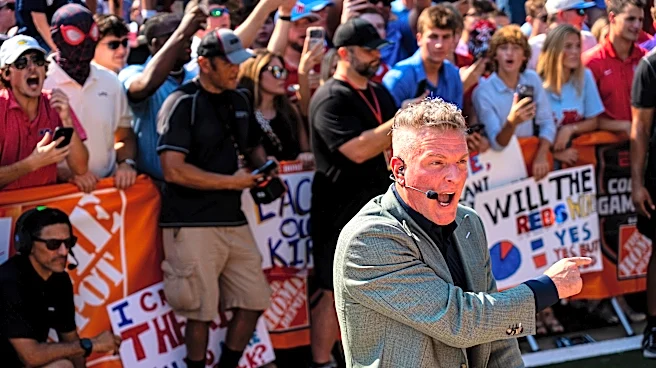
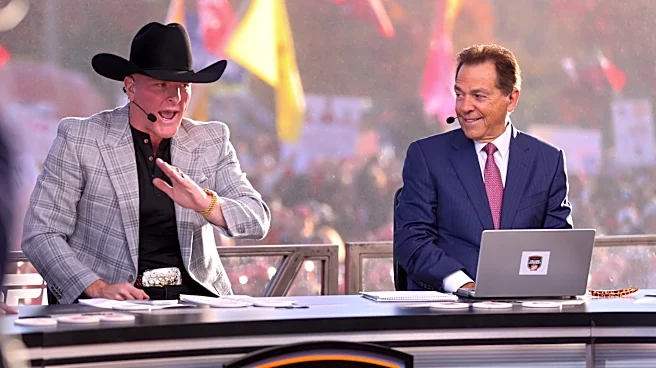
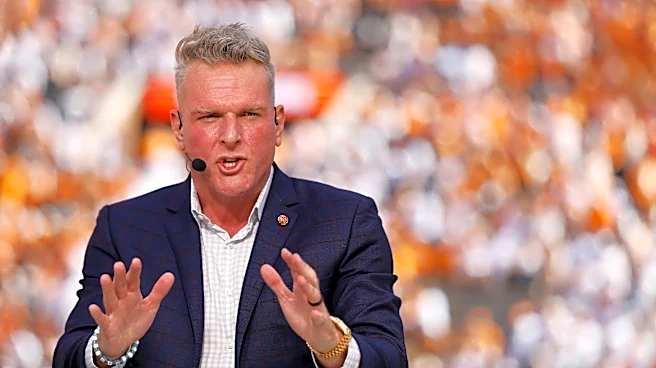
Sports commentator Jason Whitlock has asserted that Pat McAfee, a prominent ESPN personality, is operating in 'hostile territory' within the network, claiming that some ESPN colleagues wish to see him fail. Whitlock, a former ESPN broadcaster himself,
drew parallels to his own experiences at Disney, suggesting a pattern of internal animosity towards personalities who deviate from established norms. These comments follow a recent controversy involving McAfee and the University of Utah, where an official university Instagram account posted a video impersonating and mocking McAfee, making him feel unwelcome and raising safety concerns. ESPN has publicly supported McAfee, acknowledging his 'very real and valid concerns' about security, while the University of Utah apologized for the post.
Why It's Important?
This situation highlights significant internal tensions within ESPN and the broader sports media landscape. Pat McAfee's unique business model, where ESPN licenses his show and he retains considerable control, sets him apart from many traditional network personalities. This autonomy, while contributing to his popularity, appears to create friction with established ESPN staff and leadership. The alleged 'hostile territory' described by Whitlock suggests a clash between McAfee's unconventional, often unfiltered style and ESPN's corporate culture. Such internal conflicts can impact content quality, employee morale, and the network's public image. For viewers, it raises questions about the authenticity of on-air personalities and the behind-the-scenes dynamics that shape sports broadcasting.
What's Next?
The tensions surrounding Pat McAfee at ESPN are likely to persist, potentially influencing his future at the network and the broader direction of sports media. McAfee has already announced he will no longer give interviews to the media, including '60 Minutes,' citing his dissatisfaction with how he is portrayed. This decision could further isolate him from traditional media scrutiny but also reinforce his independent brand. ESPN will need to navigate these internal dynamics carefully to retain a popular personality while maintaining internal cohesion. The incident with the University of Utah also underscores the growing challenges faced by public figures in managing their image and safety in an increasingly digital and polarized environment, prompting institutions to re-evaluate their social media policies and interactions with media personalities.
Beyond the Headlines
The conflict between Pat McAfee and elements within ESPN, as described by Jason Whitlock, points to a deeper cultural struggle within large media organizations. It reflects a generational and stylistic divide between traditional broadcasting approaches and newer, more independent, and personality-driven content creation. McAfee's success outside the conventional ESPN structure, and his subsequent integration, challenges the established hierarchy and power dynamics. This situation also raises ethical questions about the responsibilities of institutions, like universities, in their public communications and the potential impact on individuals' safety and well-being. The broader implication is a continued shift in media consumption and production, where individual brands and direct audience engagement increasingly compete with, and sometimes clash with, corporate media structures.