






What's Happening?
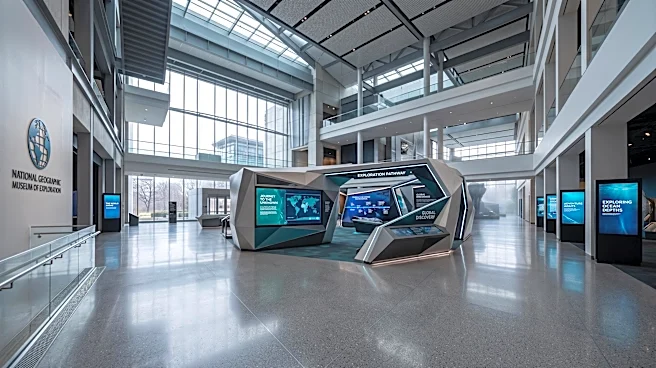
The National Geographic Museum of Exploration officially opened on June 26 within the original National Geographic Society headquarters on M Street in Washington D.C. A four-year, $300 million renovation project transformed the space from approximately
30,000 square feet to over 100,000 square feet, creating an immersive storytelling destination. The museum aims to provide visitors with an interactive journey through the media and science organization's work. It features exhibits such as a 270-degree panoramic theater called The Geoverse, a permanent photography gallery named In Focus, and the Rolex Explorers Landing, which showcases artifacts like a replica of Sylvia Earle's JIM diving suit and Sandesh Kadur's customized Suzuki Gypsy vehicle. The museum also includes current exhibitions like “Photo Ark: Animals of Nature” by Joel Sartore and “Red, White & Blue: Photographs of the United States.”
Why It's Important?
The opening of the National Geographic Museum of Exploration marks a significant shift for the organization, moving its focus from traditional print media, which ceased U.S. newsstand sales in 2024, towards digital platforms and immersive experiences. This new museum serves as a physical embodiment of National Geographic's mission to cultivate a new generation of geography and conservation enthusiasts. By offering interactive exhibits and showcasing the work of its explorers, scientists, and storytellers, the museum aims to inspire public engagement with science, exploration, and environmental conservation. It provides a tangible space for education and public discourse on critical global issues, reinforcing National Geographic's role as a leader in scientific and environmental communication.
What's Next?
The National Geographic Museum of Exploration will continue to host various exhibitions and events, including the ongoing “Photo Ark: Animals of Nature” and “Red, White & Blue: Photographs of the United States,” which runs until January 2027. The museum is also kicking off a live Storytelling Nights series, featuring National Geographic Explorers sharing insights into their work. These events, along with interactive displays and educational programs, are designed to engage a diverse audience, particularly school-aged visitors. The museum's success will likely be measured by its ability to attract visitors, foster educational outcomes, and inspire action towards its conservation and exploration goals, potentially influencing future museum development and public engagement strategies for similar institutions.
Beyond the Headlines
The transformation of the National Geographic headquarters into a modern Museum of Exploration reflects a broader trend in educational and cultural institutions to adapt to changing media consumption habits and engage audiences through experiential learning. By emphasizing immersive technology and interactive storytelling, the museum seeks to create a deeper connection with its visitors, moving beyond passive observation to active participation. This approach has implications for how scientific and environmental knowledge is disseminated to the public, potentially fostering a more informed and engaged citizenry. The museum's focus on sustainability, exemplified by the use of salvaged ash wood in its construction, also sets a precedent for environmentally conscious design in public spaces.