


What's Happening?
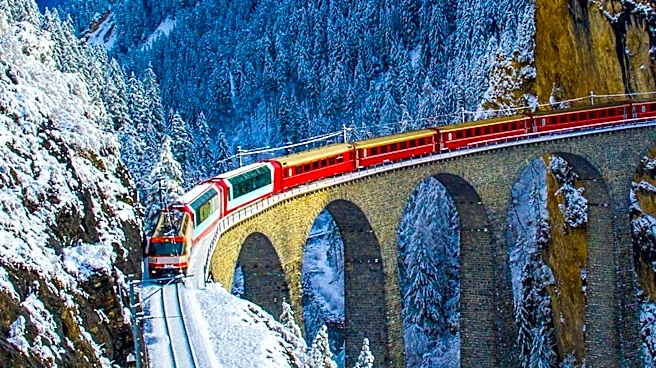
The Rocky Mountaineer train provides a luxurious two-day rail journey from Vancouver, British Columbia, to Jasper, Alberta, offering passengers an immersive experience through the Canadian Rockies. The service emphasizes slow travel, allowing guests to enjoy
the scenic landscapes, which include remote canyons, forests, and wildlife. Passengers depart Vancouver in the morning, spend a night in Kamloops, and arrive in Jasper the following evening. The train offers both Silver Leaf and Gold Leaf services, with Gold Leaf providing enhanced amenities such as glass-dome panoramic windows, a separate dining carriage, and a covered open-viewing platform. Onboard hosts ensure comfort with regular snacks, drinks, and anecdotes. The journey highlights include views of the Fraser River, Hell’s Gate, Pyramid Falls, and Mount Robson, the highest peak in the Canadian Rockies. The train's average speed of 30mph is designed for optimal sightseeing, and the route often lacks Wi-Fi and mobile service, promoting a digital detox.
Why It's Important?
This luxury rail service offers a unique travel option for those seeking an immersive nature experience without the typical stresses of travel. The focus on slow travel and digital detox caters to a growing demand for mindful tourism, allowing passengers to disconnect and fully appreciate the natural environment. The journey's ability to access remote wilderness areas, often inaccessible by other means, provides unparalleled wildlife viewing opportunities and scenic vistas. For the tourism industry, services like the Rocky Mountaineer contribute to the high-end travel market, attracting visitors who prioritize comfort, unique experiences, and scenic beauty. The economic impact extends to the regions along the route, including overnight stays in cities like Kamloops and tourism in destination towns like Jasper, supporting local businesses and employment.
What's Next?
The Rocky Mountaineer will likely continue to attract travelers seeking premium, scenic rail experiences through the Canadian Rockies. As demand for experiential travel grows, the service may explore new routes or enhance existing offerings to maintain its appeal. Potential developments could include partnerships with luxury hotels at destination points or the introduction of themed journeys focusing on specific interests like wildlife photography or culinary experiences. The company will also need to adapt to evolving travel trends and passenger expectations, potentially incorporating more sustainable practices or personalized services. Continued marketing efforts will be crucial to highlight the unique aspects of the journey, especially its blend of luxury, nature, and digital disconnection, to a global audience of affluent travelers.
Beyond the Headlines
The Rocky Mountaineer journey represents more than just a mode of transportation; it embodies a philosophy of travel that prioritizes the journey itself over the destination. In an era dominated by rapid transit and constant connectivity, this service offers a deliberate counter-narrative, encouraging passengers to slow down, observe, and reconnect with nature. The absence of Wi-Fi and mobile service fosters a unique social environment onboard, promoting interaction among passengers and a deeper engagement with the passing landscapes. This type of travel can have profound psychological benefits, reducing stress and fostering a sense of peace and wonder. Furthermore, by showcasing the pristine wilderness of the Canadian Rockies, the Rocky Mountaineer indirectly promotes environmental awareness and appreciation for conservation efforts in these vital ecosystems.