




What's Happening?
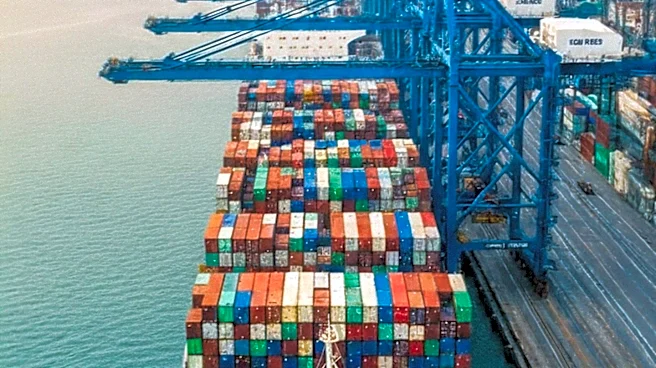
Flexport, a freight forwarding and supply chain platform, is currently tracking the container ship WADI ALRAYAN (IMO 9208875). This vessel, built in 2000 and sailing under the Egypt flag, has specifications including a length overall (LOA) of 215 meters,
a deadweight tonnage (DWT) of 40,301 tons, a gross tonnage (GT) of 34,749, and a capacity of 3,013 TEU (twenty-foot equivalent units). Flexport's platform provides real-time visibility into the ship's current position, estimated time of arrival (ETA), recent port calls, and detailed vessel specifications. The WADI ALRAYAN was reported to be operating on the CMDU:PIKEX PKX0A0W19 route as of November 23, 2026, 00:10 UTC. This tracking capability is part of Flexport's broader offering, which aims to unify shipments, orders, and inventory through an AI-powered platform.
Why It's Important?
The tracking of vessels like the WADI ALRAYAN by platforms such as Flexport is crucial for enhancing supply chain efficiency and transparency in the U.S. and globally. Real-time visibility into cargo movements allows businesses to better manage their inventory, anticipate delivery schedules, and mitigate potential disruptions. This is particularly important for U.S. industries reliant on international trade, as delays or unforeseen issues with shipping can have significant economic impacts, affecting production schedules, retail availability, and consumer prices. By providing detailed information on vessel location and status, Flexport helps U.S. companies make more informed decisions, optimize logistics, and reduce the risks associated with complex global supply chains. This increased visibility can lead to cost savings, improved customer satisfaction, and greater resilience against supply chain shocks.
What's Next?
As global supply chains continue to evolve and face various challenges, the demand for advanced tracking and management solutions like those offered by Flexport is likely to grow. Businesses will increasingly rely on AI-powered platforms to gain comprehensive insights into their logistics operations. Future developments may include even more predictive analytics, integrating data from a wider array of sources to forecast potential delays or disruptions with greater accuracy. This could lead to more proactive supply chain management, allowing U.S. companies to reroute shipments, adjust production, or communicate changes to customers more effectively. The ongoing adoption of such technologies will further streamline international trade processes and enhance the overall efficiency of goods movement into and out of the U.S.
Beyond the Headlines
The detailed tracking of individual vessels like the WADI ALRAYAN by platforms such as Flexport underscores a broader shift towards data-driven decision-making in the logistics and supply chain industry. This trend has significant implications beyond mere efficiency, touching upon issues of global trade security, environmental sustainability, and ethical sourcing. Enhanced visibility can help identify bottlenecks that contribute to increased carbon emissions from prolonged shipping times or inefficient routes. Furthermore, the ability to track goods from origin to destination can aid in combating illicit trade and ensuring compliance with international regulations. For U.S. consumers, this means a more reliable flow of goods, potentially lower costs due to optimized logistics, and greater assurance regarding the provenance and journey of the products they purchase.