







What's Happening?
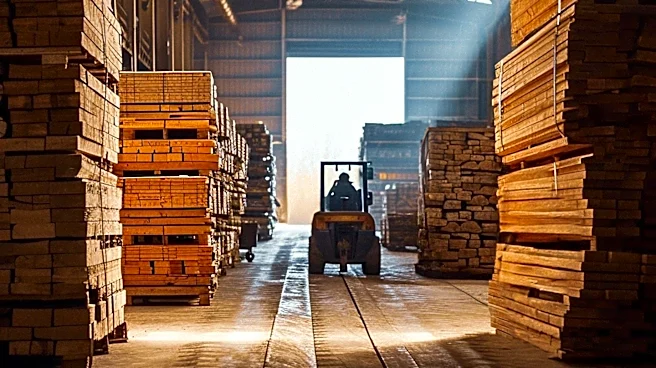
West Fraser Timber, a major North American lumber producer, has curtailed production at its High Level, Alberta, facility. This reduction in output accounts for approximately 3% of the company's total capacity. This move comes as other wood-products companies,
such as Louisiana-Pacific, have also announced production curtailments, with Louisiana-Pacific indefinitely halting operations at its Jasper, Texas, OSB facility, removing about 475 million square feet of annual production capacity. These actions are occurring in an environment where lumber inventories are described as relatively tight, potentially leading to supply-chain challenges if spring construction activity returns to normal levels. Bank of America analysts, while not rating West Fraser, noted these industry-wide production adjustments.
Why It's Important?
The production curtailment by West Fraser, alongside similar actions by other industry players, signals a strategic response to current market conditions within the U.S. and North American wood products sector. While housing affordability pressures continue to restrain construction activity, these supply reductions could contribute to tighter lumber inventories. This tightness, if coupled with an eventual rebound in housing demand, could lead to increased commodity prices for lumber and oriented strand board (OSB). For U.S. consumers and the construction industry, this could translate to higher material costs, impacting the affordability of new homes and renovation projects. Companies with significant exposure to lumber and engineered wood products may benefit from a recovery in prices, but the timing of such a recovery remains uncertain. The balance between reduced supply and subdued demand is a critical factor for the industry's financial health.
What's Next?
The immediate future will likely see continued monitoring of housing market indicators and construction activity. If normal spring construction activity resumes, the already tight lumber inventories, exacerbated by production cuts from companies like West Fraser, could lead to significant supply-chain challenges. This scenario could drive up lumber and OSB prices, potentially impacting the profitability of construction firms and the cost of housing for consumers. Industry analysts will be closely watching for any shifts in demand that could trigger a more substantial recovery in the wood products market. Further production adjustments, either increases or decreases, from major producers like West Fraser will depend on evolving market dynamics, including housing starts, interest rates, and overall economic stability.
Beyond the Headlines
The decision by West Fraser to curtail production highlights a broader trend within the U.S. and North American forest products industry: the delicate balance between supply management and market demand. Beyond immediate price fluctuations, these actions reflect the industry's sensitivity to economic cycles, particularly those affecting the housing market. The long-term implications could include a greater emphasis on agile production strategies and supply chain resilience to mitigate future volatility. Furthermore, the environmental impact of such decisions, including resource management and sustainable forestry practices, remains a critical underlying consideration. The industry's ability to adapt to these challenges will shape its future, influencing not only economic outcomes but also the broader ecological footprint of wood product manufacturing.