



What's Happening?
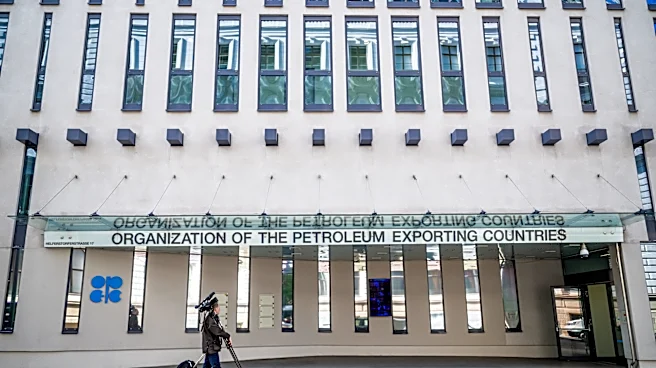
The OPEC+ group, comprising the Organization of the Petroleum Exporting Countries and its allies, is scheduled to hold a crucial meeting on November 29, 2026. During this meeting, all member countries are expected to decide on oil production levels for
the year 2027. This decision follows a period of market volatility, with Brent crude settling at $92.57 on Friday, November 20, marking a 3.41 percent decline for the week and its third consecutive weekly loss. The market is currently pricing in a supply surplus, influenced by factors such as recovered Middle East supply and the U.S. holding off on renewed strikes on Iran. A key input for the upcoming decision is the production capacity review, which sets the baseline for 2027 quotas. This review's completion was delayed due to the war with Iran impacting capacity expansion plans in parts of the Middle East.
Why It's Important?
The upcoming OPEC+ decision on 2027 production quotas holds significant implications for global oil markets and, consequently, for U.S. industries and consumers. A decision to increase or decrease production can directly impact crude oil prices, affecting gasoline costs for American drivers and operational expenses for businesses reliant on oil. A continued supply surplus, as currently observed, could lead to lower prices, potentially benefiting consumers but challenging U.S. domestic oil producers. Conversely, any move by OPEC+ to restrict supply could drive prices higher, increasing inflationary pressures and impacting economic growth. The geopolitical context, including the situation in the Strait of Hormuz and U.S. relations with Iran, adds another layer of complexity, as any disruptions or policy shifts could rapidly alter supply dynamics and market sentiment.
What's Next?
Ahead of the November 29 meeting, market participants will closely monitor delegate comments from OPEC+ members for any signals regarding their intentions for 2027 production levels. The outcome of the production capacity review will be critical in shaping the final decision. Additionally, any further shipping incidents in the Strait of Hormuz or shifts in U.S. policy towards Iran could introduce new variables into the market. U.S. markets will also experience holiday trading conditions, with closures for Thanksgiving on November 26 and early closures on November 27, which could lead to larger price movements due to lower trading volumes. Analysts are setting reference levels for Brent crude for the week ahead, with $89 as a downside reference and $96 as an upside reference, reflecting potential market reactions to the upcoming OPEC+ announcement and other geopolitical developments.
Beyond the Headlines
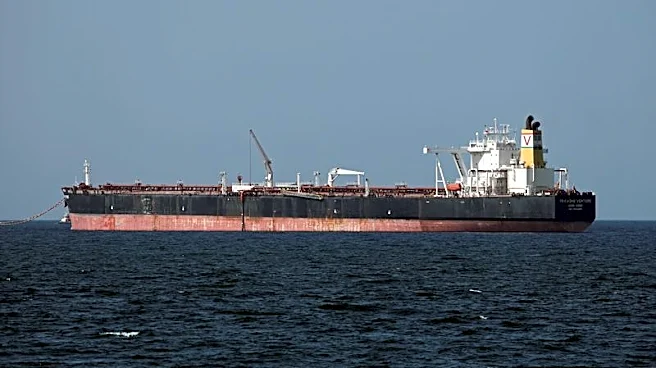
The ongoing discussions within OPEC+ and the broader oil market dynamics highlight the intricate balance between supply, demand, and geopolitical stability. The delay in the production capacity review due to regional conflicts underscores how geopolitical events can directly impact global energy policy and economic forecasts. The market's sensitivity to events like a tanker fire near the Strait of Hormuz illustrates the fragility of global supply chains and the critical role of key maritime chokepoints. Furthermore, the U.S. stance on Iran continues to be a significant, albeit indirect, factor influencing oil supply, demonstrating the interconnectedness of international relations and energy security. The long-term implications of these decisions extend beyond immediate price fluctuations, potentially influencing investment in alternative energy sources and the pace of global energy transition.