








What's Happening?
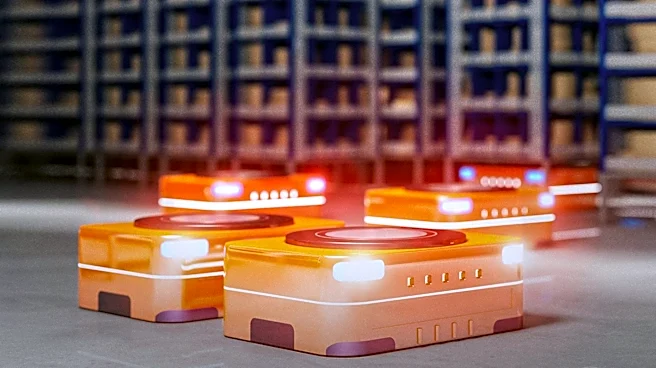
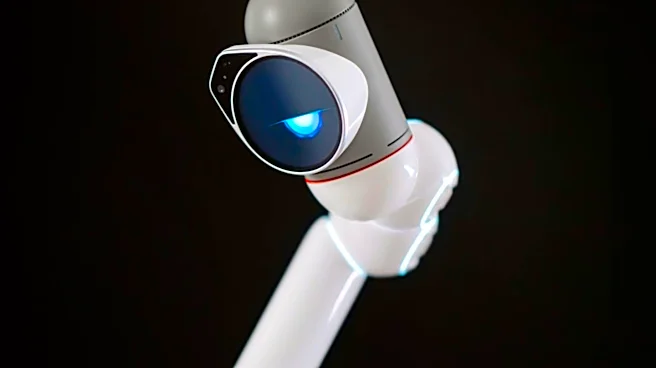
The integration of compact collaborative robots (cobots) with autonomous mobile robots (AMRs) is transforming warehouse operations. These cobots, particularly seven-axis models, offer enhanced flexibility and precision, allowing them to perform tasks
such as pick-and-place, palletizing, and machine-tending with greater efficiency. By mounting cobots on AMRs, facilities can streamline workflows, reduce manual touchpoints, and improve accuracy in task execution. This integration addresses labor shortages and increases productivity, as cobots can handle tasks that require precision and adaptability in various orientations.
Why It's Important?
The adoption of cobots integrated with AMRs is significant for the warehousing industry, which faces ongoing labor challenges. This technology not only enhances productivity but also improves worker safety by reducing physical strain and injury. As cobots take on repetitive tasks, human workers can focus on more complex activities, potentially increasing job satisfaction and reducing turnover rates. The integration of cobots and AMRs represents a cost-effective solution for warehouses, offering a competitive edge through improved operational efficiency.
What's Next?
As the demand for warehouse automation grows, the adoption of cobots and AMRs is expected to increase. Companies will likely continue to explore how these technologies can be integrated into their operations to maximize efficiency and support skilled workers. Decision-makers will need to evaluate the benefits of seven-axis cobot-AMR integration while ensuring that safety protocols are maintained. The ongoing development of this technology could lead to further innovations in material handling and logistics.
Beyond the Headlines
The integration of cobots with AMRs highlights the evolving relationship between humans and machines in industrial settings. As these technologies become more prevalent, there will be a need to balance automation with human oversight to ensure ethical and safe operations. The shift towards automation also raises questions about the future of work and the skills required for workers to thrive in increasingly automated environments.