







What's Happening?
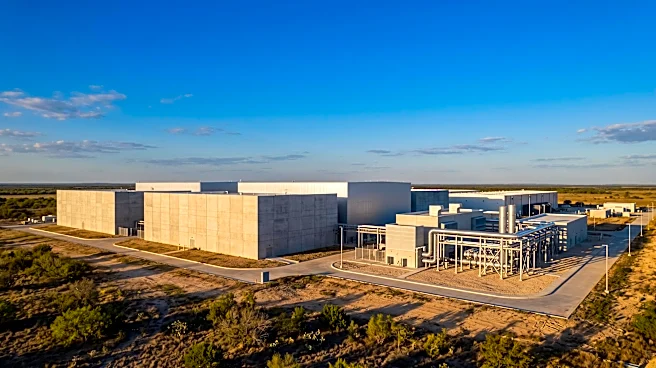
Big Watt Digital and PowerHouse Data Centers, co-development partners, have announced the planning approval for their Taylor Technology Campus project in Taylor, Texas. This development marks a significant step in their strategy to establish AI-ready
infrastructure in high-growth U.S. markets. The campus is designed to deliver up to one gigawatt of hyperscale data center capacity, addressing the increasing demand for reliable power and deployable infrastructure for AI and cloud computing. The project will feature dedicated, behind-the-meter power generation, aiming to provide speed, scale, and certainty for the AI economy by integrating power and digital infrastructure from the outset. The joint venture's combined portfolio now includes 12 gigawatts of capacity in active development, with a pipeline exceeding 24 gigawatts across the country. The Taylor Technology Campus is strategically located in Austin's technology corridor, offering connectivity to major transport and fiber infrastructure, high-voltage transmission assets, and natural gas resources to support large-scale power generation.
Why It's Important?
This development is crucial for the U.S. technology sector, particularly in the rapidly expanding fields of artificial intelligence and cloud computing. The current constraint on AI and cloud growth is often access to reliable, large-scale electricity. By combining on-site, grid-independent power generation with sophisticated digital infrastructure, Big Watt and PowerHouse are directly addressing this challenge. The project's focus on 'speed to power' at scale will enable faster deployment of AI infrastructure for leading hyperscaler customers, which is vital for maintaining the U.S.'s competitive edge in technological innovation. Economically, the Taylor Technology Campus is projected to bring substantial benefits to the Taylor and broader Austin region, including approximately $1.3 billion in cumulative gross tax revenue to the city of Taylor from 2027 through 2046, and an estimated $4.8 billion in total economic output during the construction period. It is also expected to create around 19,000 construction-period jobs and 500 recurring full-time equivalent jobs at stabilized buildout, fostering local economic growth and employment opportunities.
What's Next?
The Taylor Technology Campus project is targeting first power availability in the first half of 2028, aligning power delivery with anticipated data center deployment schedules. The development agreement includes project-specific standards for water use, stormwater management, site design, landscaping, setbacks, lighting, and noise, with enhanced standards in several areas. The developers have also committed to providing direct community investments totaling approximately $28.2 million, including funds for quality-of-life improvements, educational programs for Taylor ISD, student scholarships, workforce development, and animal care. Additionally, they plan to offer at least 20 Taylor ISD student internships annually. The ongoing dialogue with local stakeholders is expected to continue as the campus develops, ensuring responsible infrastructure development that considers both the project's impacts and opportunities to support local infrastructure and community priorities.
Beyond the Headlines
The Taylor Technology Campus represents a broader trend in the U.S. where the exponential growth of AI and high-performance computing is driving significant investment in integrated power and digital infrastructure. This project highlights the evolving model of data center development, moving away from sole reliance on incremental grid capacity towards dedicated, behind-the-meter power generation. This shift has profound implications for energy policy, grid stability, and the decentralization of power generation, especially as demand for computing power continues to surge. The emphasis on responsible development, environmental stewardship, and community engagement within the project's framework also sets a precedent for future large-scale infrastructure initiatives. It underscores the increasing expectation for technology companies to not only innovate but also contribute positively to local economies and address environmental concerns, balancing technological advancement with sustainable practices and community welfare.