



What's Happening?
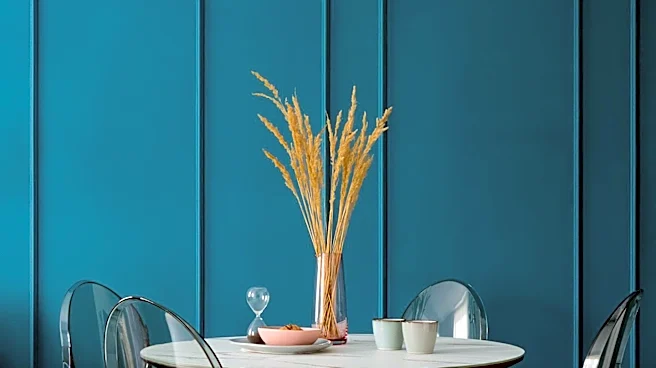
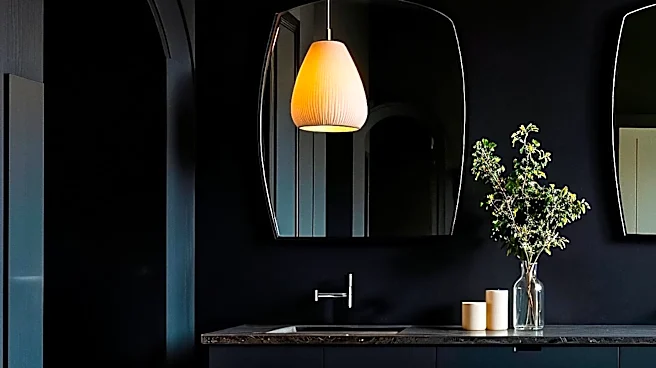
Interior designers are promoting specific paint techniques, including 'color drenching' and the use of dark colors, to create the illusion of larger spaces in small rooms. Cathleen Gruver of Gruver Cooley explains that color drenching, which involves
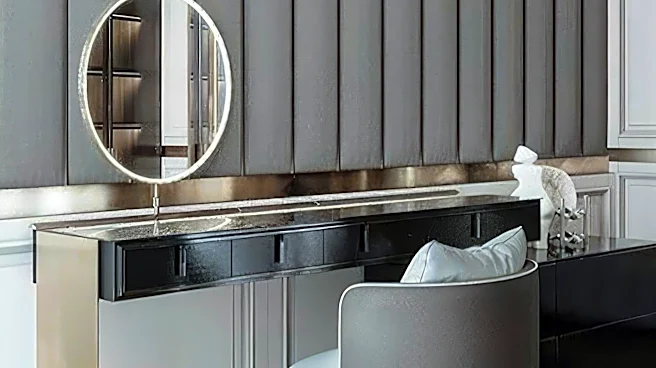
painting walls, trim, and ceilings in a single saturated color, removes visual 'stop points' that can make a room feel confined. This technique allows the walls to appear to dissolve, making the space feel more expansive. Tracy Morris, another interior designer, emphasizes minimizing visual breaks, noting that a consistent color scheme makes boundaries recede and the room feel more cohesive. Additionally, designers suggest that dark colors, counter-intuitively, can blur the boundaries of a small space, adding drama and making it feel larger than it is. Glossy finishes are also recommended for their reflective qualities, which add depth and bounce light, contributing to a brighter, more spacious feel.
Why It's Important?
These design strategies offer homeowners and renters practical and cost-effective alternatives to extensive renovations for maximizing small living spaces. The emphasis on color drenching and strategic use of dark colors challenges conventional wisdom that often dictates light colors for small rooms, providing new avenues for aesthetic and functional improvement. For the interior design industry, this trend highlights an evolving approach to space perception, potentially influencing paint manufacturers and home decor retailers to focus on saturated color palettes and diverse finishes. Consumers stand to gain by being able to transform their living environments without significant structural changes, making home improvement more accessible and impactful. The shift towards embracing darker, more dramatic colors also reflects a broader trend in interior aesthetics, moving away from purely minimalist or neutral palettes.
What's Next?
The growing popularity of 'color drenching' and the strategic use of dark colors is likely to continue influencing interior design trends. Paint companies may see increased demand for a wider range of saturated and darker hues, potentially leading to new product lines and marketing campaigns focused on these techniques. Design publications and home improvement shows are expected to feature more examples and tutorials on these methods, further educating the public. Homeowners may increasingly experiment with these approaches, particularly in smaller rooms like nurseries, where specific color drenching in greens and rose-browns is recommended for 2027 to create cozy and intentional spaces. The adoption of these techniques could also lead to a re-evaluation of traditional design rules for small spaces, fostering more creative and bold interior choices.
Beyond the Headlines
The embrace of 'color drenching' and dark colors in small spaces reflects a deeper psychological understanding of how humans perceive their environment. By eliminating visual interruptions and blurring boundaries, these techniques manipulate spatial perception, creating a sense of openness and depth where physical space is limited. This trend also speaks to a desire for more personalized and emotionally resonant living spaces, moving beyond purely functional or minimalist aesthetics. The use of rich, saturated colors can evoke a sense of luxury, comfort, and intimacy, transforming a small room from a constraint into a deliberate design choice. Furthermore, the recommendation of specific colors like Dulux Soulful Sage for nurseries in 2027 suggests a growing awareness of color psychology in early childhood development, aiming to create calming and nurturing environments.