




What's Happening?
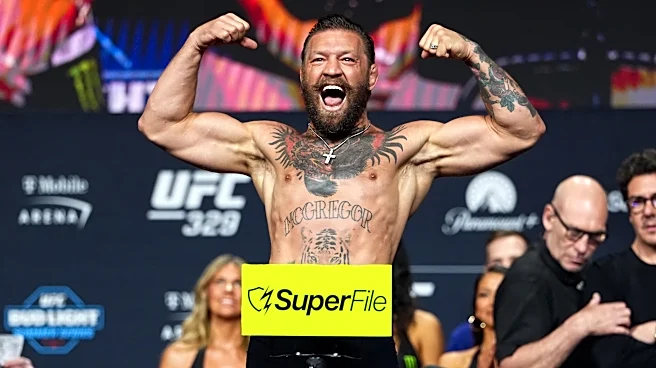
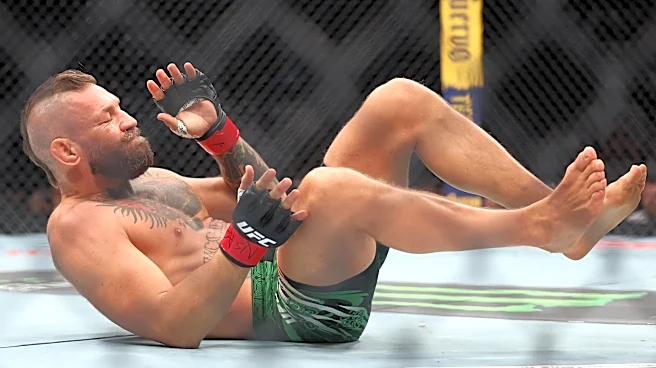
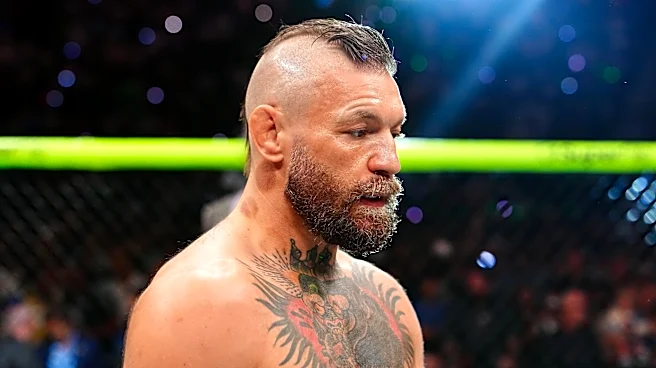
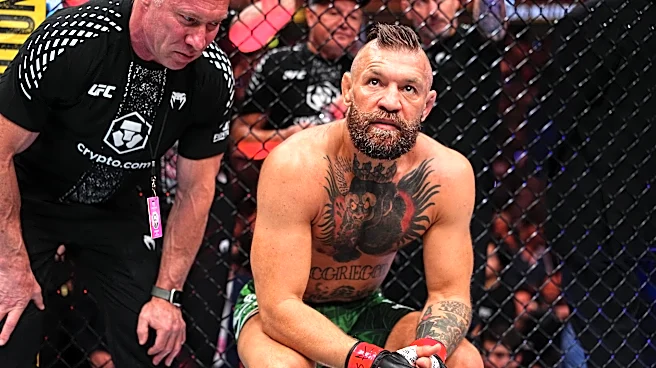
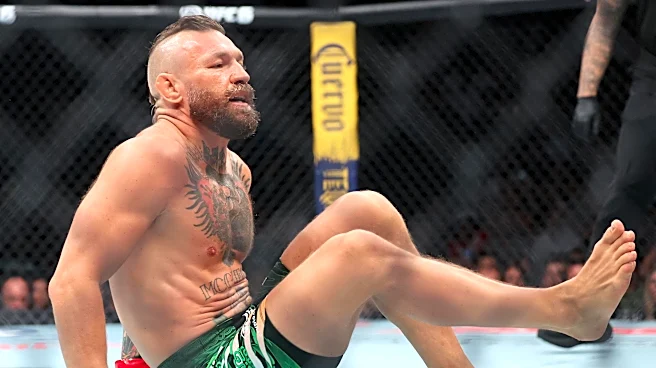
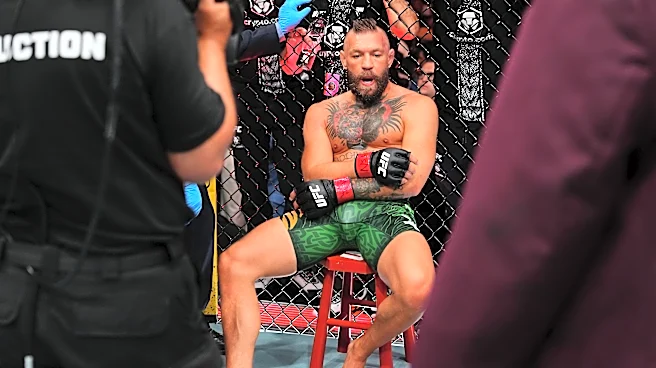
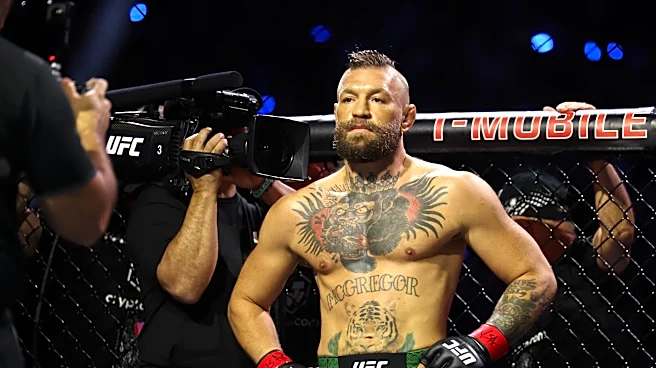
Conor McGregor, the renowned mixed martial artist, recently returned to the octagon at UFC 329 after a five-year hiatus, facing Max Holloway. The bout, held at T-Mobile Arena in Las Vegas, ended abruptly when McGregor sustained a knee injury during a jumping
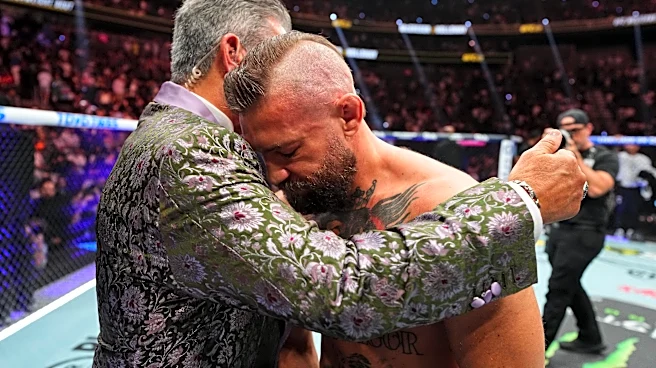
switch kick, leading to a TKO victory for Holloway. McGregor's knee gave out multiple times, forcing the fight to be stopped just over a minute into the first round. Following the match, McGregor expressed his desire for the loss to be declared a no-contest, citing the injury as a significant factor. He announced on social media that he is awaiting medical test results and hopes to have the decision overturned, although such outcomes are rare in the UFC. This incident mirrors a previous situation where Alexandre Pantoja's request for a no-contest was denied after an injury during a title fight.
Why It's Important?
The outcome of this fight has significant implications for McGregor's career and the UFC landscape. McGregor's request for a no-contest highlights the challenges athletes face when injuries impact their performance and records. If granted, it could set a precedent for future cases where injuries play a pivotal role in fight outcomes. For the UFC, maintaining the integrity of fight results is crucial, and overturning decisions could lead to increased scrutiny and demands from other fighters. McGregor's potential prolonged absence due to injury also affects the UFC's promotional strategies, as he remains one of the sport's biggest draws. The decision on whether to overturn the result could influence how injuries are handled in future matches, impacting fighters' strategies and the UFC's regulatory framework.
What's Next?
McGregor is currently awaiting the results of his medical tests to determine the extent of his knee injury. Depending on the severity, he may face another extended period away from the octagon, delaying any potential rematch with Holloway. The UFC will likely review McGregor's request for a no-contest, but historical precedents suggest that such appeals are rarely successful. Meanwhile, Holloway may continue to advance in his career, potentially facing new challengers. The UFC will need to address the broader implications of injury-related appeals, possibly revisiting its policies to ensure fairness while maintaining the sport's competitive integrity.