







What's Happening?
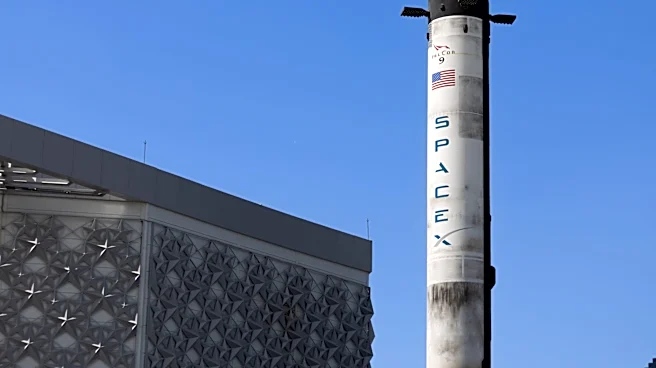
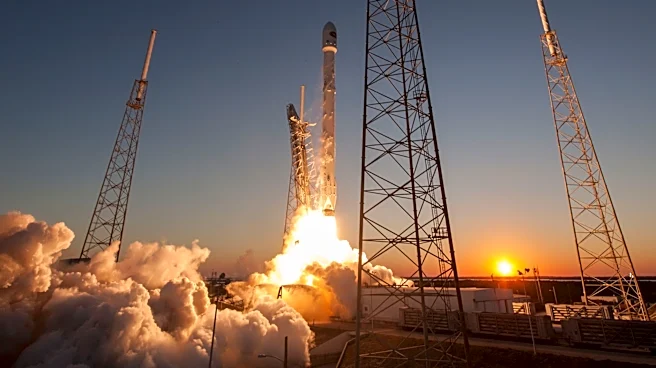
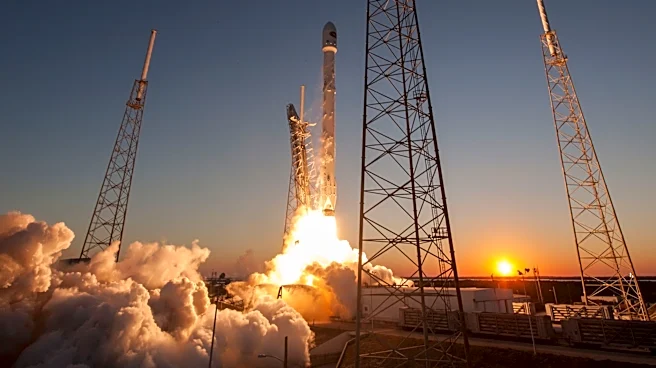
SpaceX has launched a new return capsule named Starfall on a test mission using a Falcon 9 rocket. The mission aims to demonstrate the capsule's ability to fly in a controlled manner and survive reentry into Earth's atmosphere. Starfall is a disk-shaped
spacecraft, approximately 2.5 feet tall and 10.2 feet in diameter, capable of carrying about 2,200 pounds of payload. The capsule is designed to provide affordable access to microgravity environments for scientific research and in-space manufacturing. The launch was conducted with a degree of secrecy, as SpaceX cut off its webcast shortly after liftoff, a practice typically associated with national security missions.
Why It's Important?
The development and launch of the Starfall capsule represent SpaceX's continued innovation in space technology, particularly in the area of return vehicles. By providing a cost-effective means of accessing microgravity, Starfall could significantly impact scientific research and commercial manufacturing in space. The capsule's ability to return payloads safely to Earth opens new possibilities for industries looking to utilize space for production and research. SpaceX's entry into this market could enhance its position as a leader in space exploration and commercial spaceflight, potentially influencing the strategies of other companies in the sector.
What's Next?
Following the test mission, SpaceX will likely analyze the performance of the Starfall capsule to refine its design and capabilities. Future missions may involve more complex payloads and collaborations with scientific and commercial partners. The success of Starfall could lead to increased demand for space-based manufacturing and research services, prompting further investment in this area. Additionally, SpaceX's advancements may encourage regulatory bodies to update policies related to space operations and reentry procedures.