





What's Happening?
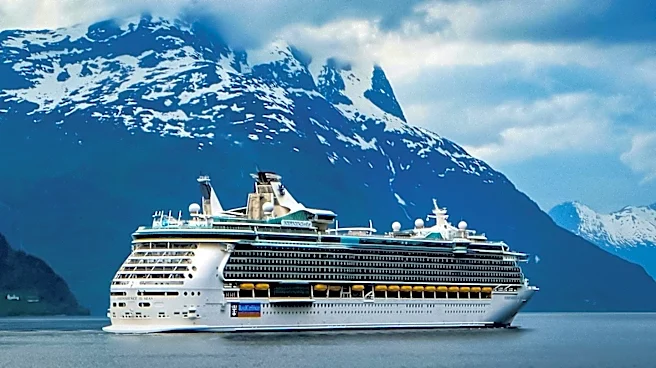
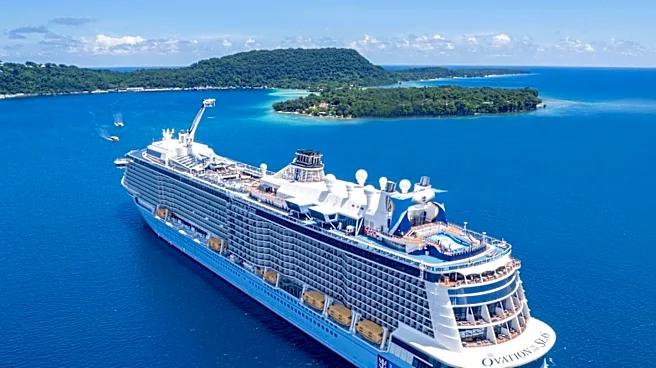
Royal Caribbean is advancing cruise travel with its latest ship concepts, emphasizing innovation, modern amenities, diverse itineraries, and exceptional service. The company's Oasis-class ships, first launched in 2009 with Oasis of the Seas, are noted
for their significant size, innovative design, and extensive amenities, including seven distinct neighborhoods and numerous dining options. These vessels cater to a wide range of interests and age groups. Royal Caribbean's new designs aim to revolutionize oceanic voyages by pushing boundaries in luxury, entertainment, and sustainability. The Icon of the Seas, launched in 2024, is highlighted as the world's largest cruise ship, offering an unparalleled experience with a vast array of activities and amenities for families, couples, and solo travelers. The Quantum and Quantum Ultra classes also contribute to this innovation with cutting-edge technology and versatile designs suitable for various weather destinations.
Why It's Important?
Royal Caribbean's continuous innovation in ship design and onboard experiences significantly impacts the cruise industry by setting new standards for luxury, entertainment, and sustainability. This focus on advanced features and diverse offerings attracts a broader demographic of travelers, from families seeking adventure to couples desiring relaxation, thereby expanding the market for cruise vacations. The introduction of larger, more amenity-rich ships like the Icon of the Seas can stimulate economic activity in port cities through increased passenger spending on excursions, local businesses, and transportation. For competitors, Royal Caribbean's advancements create pressure to innovate and upgrade their own fleets, potentially leading to an industry-wide enhancement of cruise offerings. This competitive environment ultimately benefits consumers by providing more sophisticated and varied travel options, while also driving technological and environmental improvements within the maritime sector.
What's Next?
Royal Caribbean is expected to continue its trajectory of innovation, with a seventh Oasis-class ship scheduled for launch in 2028, further expanding its fleet of large, amenity-rich vessels. The company will likely focus on integrating more sustainable technologies and practices into its new ship designs and operations, aligning with growing environmental concerns among travelers and regulators. Future developments may also include enhanced digital integration for a more seamless guest experience, from booking to onboard activities. The competitive landscape will likely see other major cruise lines responding with their own innovative projects to keep pace with Royal Caribbean's advancements. Travelers can anticipate an even wider array of specialized itineraries and themed cruises, as the industry strives to offer unique and memorable voyages to diverse consumer segments.
Beyond the Headlines
The trend towards increasingly larger and more technologically advanced cruise ships, as exemplified by Royal Caribbean, raises deeper implications for port infrastructure and environmental management. Larger ships require more extensive port facilities, potentially leading to significant investments in upgrades and expansions in coastal communities. Environmentally, while Royal Caribbean emphasizes sustainability, the sheer scale of these vessels and the volume of passengers they carry necessitate rigorous waste management, emissions control, and marine ecosystem protection protocols. The concentration of tourism in specific destinations due to these mega-ships can also lead to cultural and social impacts on local communities, requiring careful planning to balance economic benefits with the preservation of local heritage and quality of life. The ongoing pursuit of 'unseen experiences' and 'redefining travel' also reflects a broader societal desire for unique, immersive, and often luxurious leisure activities.