








What's Happening?
The robotics industry is increasingly focusing on the integration of mechanical positioning to enhance the dexterity and efficiency of robots in complex assembly operations. This approach is being recognized as crucial for improving the mobility, range,
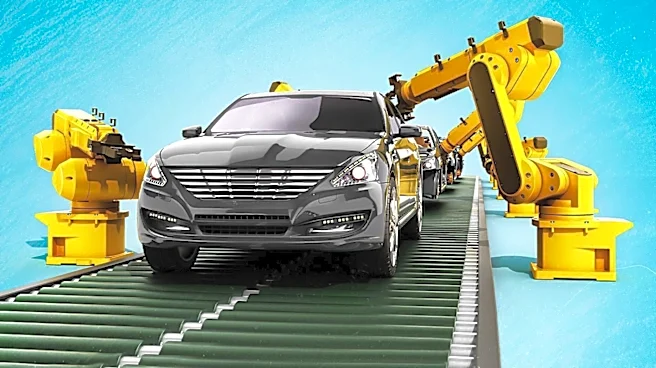
and speed of robotic systems. Key players like FANUC, KUKA, and ABB are leading the way with innovations that incorporate advanced positioning systems. FANUC's LR Mate Series, for example, has been utilized to improve assembly efficiency in electronics and medical device manufacturing. Similarly, KUKA's KR QUANTEC series is designed for heavy-duty applications, aiding in the assembly of large automotive and construction products. These advancements are enabling robots to perform tasks with greater precision and flexibility, which is essential for industries such as aerospace and automotive where complex geometries are common.
Why It's Important?
The emphasis on mechanical positioning in robotics is significant as it directly impacts the efficiency and capability of automated systems. By enhancing the precision and range of motion, these systems can undertake more complex tasks, reducing the need for manual intervention and increasing productivity. This is particularly important in high-stakes industries like aerospace and automotive manufacturing, where precision and efficiency are critical. The integration of advanced positioning systems also supports the broader trend of digital transformation in manufacturing, where automation and robotics are key drivers of competitiveness and innovation. As these technologies continue to evolve, they promise to deliver substantial cost savings and operational efficiencies, positioning companies that adopt them at the forefront of their industries.
What's Next?
As the robotics industry continues to evolve, the next steps involve further integration of mechanical positioning systems with emerging technologies such as artificial intelligence and machine learning. This synergy is expected to enhance the capabilities of collaborative robots (cobots) and improve their interoperability with human workers. The focus will likely be on developing systems that are not only more efficient but also adaptable to a wide range of applications. This could lead to increased adoption of robotics across various sectors, driving further innovation and setting new standards for automated assembly operations. Additionally, as these technologies become more accessible, smaller manufacturers may also begin to leverage these advancements, broadening the impact of robotics on the global manufacturing landscape.