

What's Happening?
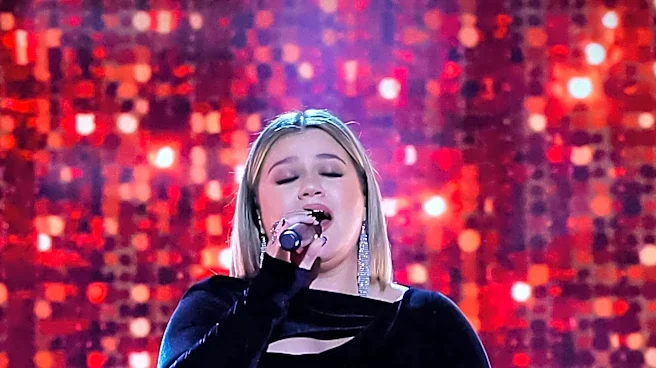
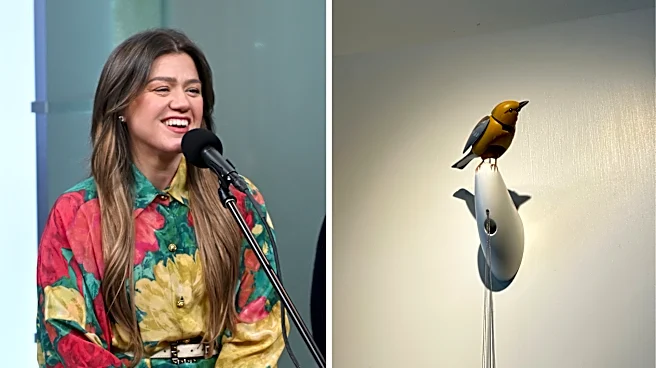
Grammy winner Kelly Clarkson has initiated a social media controversy with Art of Play, a Brooklyn novelty store, after a disputed interaction regarding a mechanical singing and dancing bird named Molly. Clarkson claimed she was treated dismissively by
store employees, who allegedly implied she could not afford the $15,000 bird and offered to find a comparable item. She likened the experience to a scene from the movie 'Pretty Woman.' Art of Play co-owner Adam Rubin initially stated the bird was a permanent fixture and not for sale, but later confirmed to NBC News that Molly is now valued at $15 million. The store claims that if the bird is sold at this price, employees would receive a $15,000 bonus, and the artist, Bliss Kolb, would get $1 million, with remaining profits funding a display dedicated to Molly. Clarkson subsequently posted photos showing a price tag on the bird, contradicting the store's initial claim that it was not for sale, and accused the store of being rude and dishonest. The store maintains that it offered Clarkson an identical bird for $15,000 and a similar model for $2,000, but she left before seeing it.
Why It's Important?
This incident highlights the significant impact of celebrity social media presence on small businesses. Kelly Clarkson's initial post, shared with her millions of followers, quickly led to a wave of online criticism and negative attention for Art of Play. This demonstrates how a single social media post from a public figure can rapidly escalate into a public relations crisis, affecting a business's reputation and potentially its operations. The store's co-owner, Adam Rubin, described the situation as 'asymmetrical social warfare,' indicating the disproportionate power dynamics at play. The dispute also raises questions about customer service, perceived elitism, and the challenges small businesses face when dealing with high-profile individuals. The store's decision to dramatically increase the bird's price to $15 million, with a portion allocated to employees and the artist, could be seen as a strategic move to capitalize on the viral attention, or as a sarcastic response to the controversy, further fueling public discussion about the value of art and celebrity influence.
What's Next?
The ongoing dispute could continue to unfold on social media, with both Kelly Clarkson and Art of Play potentially issuing further statements or engaging with the public. The store's new $15 million valuation for Molly might attract further media attention, and it remains to be seen if any buyer would come forward at that price, or if the store intends to seriously pursue a sale. The incident could also prompt broader discussions about the responsibilities of celebrities when sharing negative experiences online and the vulnerability of small businesses to such public call-outs. Legal action is not explicitly mentioned, but the heightened rhetoric from both sides suggests the potential for further escalation. The situation may also lead to increased scrutiny of how businesses handle celebrity customers and how they manage their online presence in the face of public backlash.
Beyond the Headlines
Beyond the immediate social media spat, this event touches upon deeper societal themes regarding consumer culture, celebrity power, and the perception of value. The 'Pretty Woman' analogy used by Clarkson resonates with common narratives of class and perceived status in retail environments. The rapid mobilization of online support for Clarkson and subsequent attacks on the store illustrate the phenomenon of 'cancel culture' and the swift, often unmoderated, judgment delivered by online communities. The store's response, including the dramatic price increase and the accusation of 'asymmetrical social warfare,' highlights the struggle of smaller entities to defend themselves against the immense reach of celebrity platforms. This incident also subtly questions the authenticity of online narratives versus real-world interactions, as both parties present conflicting accounts of the same event, leaving the public to interpret the truth. It underscores the evolving landscape of public discourse where personal grievances can quickly become widespread public spectacles with real-world consequences for businesses and individuals.