




What's Happening?
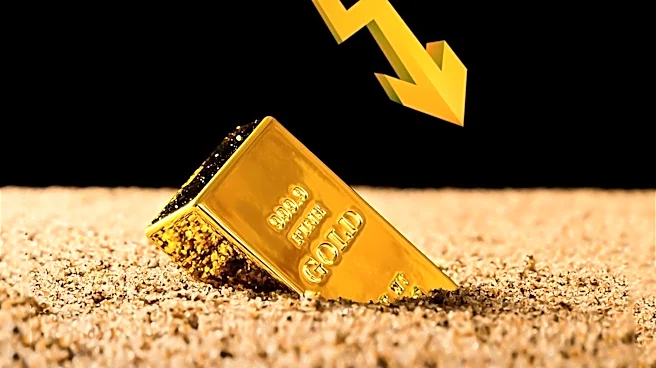
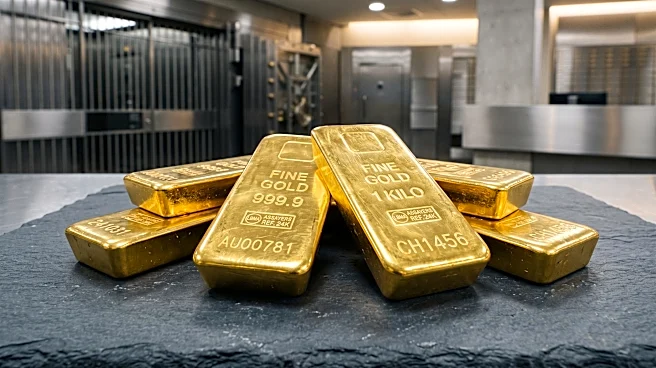
Gold prices are demonstrating resilience, holding above the $4,000 per ounce mark despite persistent inflation and the prospect of further interest rate hikes by the Federal Reserve. As of today, spot gold traded at $4,031.80 an ounce, unchanged on the day, according
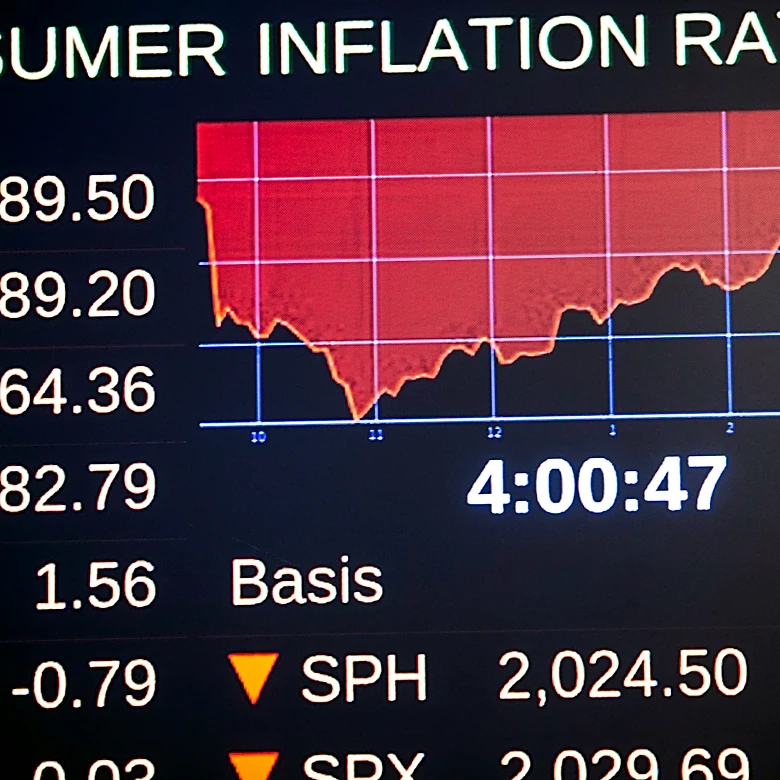
to Kitco News. Standard Chartered, in a report by Suki Cooper, Global Head of Commodities Research, maintains an optimistic outlook, forecasting gold prices to average $4,650 an ounce in the fourth quarter of this year, potentially rising to $4,850 in the first quarter of 2027. This forecast comes even as the U.S. Consumer Price Index rose 0.4% in October, exceeding economists' expectations, and core inflation also surpassed predictions. The bank notes that the $4,000 level has proven to be a strong support, even after a 2% selloff following hotter-than-expected inflation data. Standard Chartered identifies $4,200 an ounce as the next significant resistance level for gold.
Why It's Important?
This sustained strength in gold prices, despite a challenging economic environment characterized by high inflation and rising interest rates, signals a potential shift in investor sentiment and the metal's role as a safe-haven asset. The ability of gold to hold above $4,000 an ounce, even with stronger-than-expected employment data, suggests increased market resilience. For U.S. investors and the broader economy, a rising gold price can indicate concerns about long-term inflation, currency devaluation, and economic uncertainty. The report highlights that improving investment flows, particularly through gold-backed exchange-traded products, and robust central bank demand are creating a solid price floor. This suggests that institutional and sovereign entities are increasingly diversifying their assets into gold, providing a structural underpinning for its value. The weakening correlation between gold and equity markets also implies that investors are less inclined to sell gold to cover losses in other asset classes, reinforcing its traditional role as a hedge.
What's Next?
Standard Chartered anticipates that the Federal Reserve will raise interest rates by 25 basis points in December, rather than a more aggressive 50-basis-point move, and then hold rates steady throughout 2027. This more measured approach by the Fed could provide a more stable environment for gold prices. The bank expects central bank demand for gold to exceed its full-year forecast, further reinforcing the long-term structural support for the market. Investors will likely continue to monitor inflation data and Federal Reserve policy decisions closely, as these factors will significantly influence gold's trajectory. The $4,200 an ounce level will be a key resistance point to watch, and a breach of this could signal further upward momentum towards Standard Chartered's year-end target of $4,650.
Beyond the Headlines
The sustained demand for gold, particularly from central banks and through exchange-traded products, points to deeper concerns about global economic stability and the long-term value of fiat currencies. The report's mention of investors focusing on longer-term risks, including government debt, inflation, and the economic implications of artificial intelligence spending, suggests a growing apprehension about systemic risks that extend beyond immediate economic indicators. This trend could signify a broader re-evaluation of traditional investment strategies, with a renewed emphasis on tangible assets like gold as a hedge against geopolitical and economic uncertainties. The shift in gold's correlation with equity markets also indicates a potential decoupling, where gold is increasingly seen as an independent store of value rather than merely an inverse play to stock market performance. This could lead to a more prominent role for gold in diversified investment portfolios in the coming years.