








What's Happening?
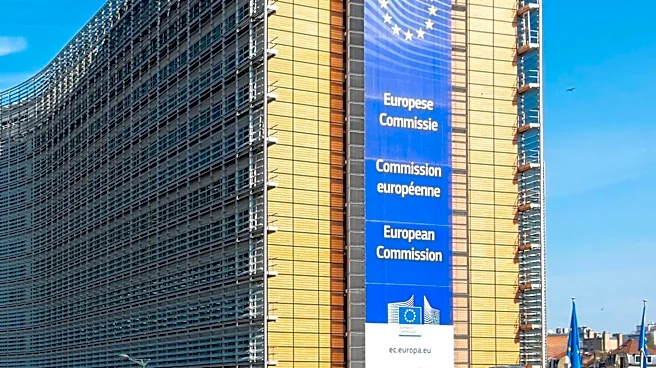
Team Europe, comprising the EU Delegation to Australia and Member States, actively participated in the International Mining and Resources Conference (IMARC) to bolster cooperation with Australia on critical minerals, supply chain resilience, and industrial
partnerships. This year marked the debut of an EU Pavilion at IMARC, serving as a platform to highlight European involvement in Australia's resources sector and foster dialogue with government, industry, and stakeholders. European Commission Deputy Director-General Valère Moutarlier and Head of Representation for the Pacific at the European Investment Bank Nadège Hopman attended, engaging in panel discussions. DDG Moutarlier moderated a keynote panel that included high-level Australian, German, Italian, and Polish officials, who emphasized the necessity of international collaboration for strengthening supply chain resilience. Ambassador Lawrence Meredith also met with Australian Ministers to explore deeper collaboration in the resources sector, reflecting a shared interest in secure, sustainable, and diversified critical mineral supply chains. The conference also featured an EU-Australia Business Networking Reception, drawing over 200 government and business leaders interested in enhancing cooperation on critical minerals, trade, and investment.
Why It's Important?
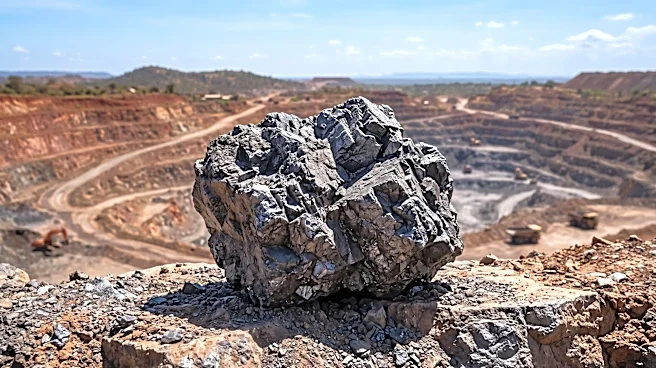
The intensified cooperation between the EU and Australia on critical minerals is strategically significant for both regions. For the EU, it represents a crucial step towards diversifying its supply chains for essential raw materials, reducing reliance on a limited number of suppliers, and enhancing its economic security. Critical minerals are vital for the EU's green and digital transitions, underpinning industries such as electric vehicles, renewable energy technologies, and advanced electronics. By partnering with Australia, a major global supplier of these minerals, the EU aims to secure a stable and sustainable source. For Australia, this collaboration offers opportunities to attract European investment in its mining and processing sectors, further developing its critical minerals industry and creating economic growth. The partnership also aligns with global efforts to establish more resilient and ethical supply chains, promoting responsible mining practices and environmental sustainability. This collaboration could set a precedent for other international partnerships focused on securing critical resources.
What's Next?
Following the IMARC conference, the EU and Australia are expected to further operationalize their Strategic Partnership on Sustainable Critical and Strategic Minerals. This will likely involve concrete steps such as facilitating investments in Australian critical mineral projects by European entities, fostering technology transfer, and developing joint research initiatives. The dedicated conference session on the EU-Australia Strategic Partnership on Minerals highlighted practical opportunities, suggesting that future efforts will focus on integrating European and Australian supply chains and supporting projects that enhance the resilience and competitiveness of critical mineral value chains. Continued high-level dialogues and business-to-business engagements are anticipated to translate the expressed interest into tangible projects and agreements. Site visits undertaken by EU delegates to various Australian critical mineral sites indicate a proactive approach to understanding Australia's capabilities and identifying specific areas for collaboration, which will likely lead to targeted investment and partnership proposals in the near future.
Beyond the Headlines
The deepening EU-Australia collaboration on critical minerals extends beyond immediate supply chain security, touching upon broader geopolitical and economic shifts. This partnership underscores a global trend where major economic blocs are actively seeking to de-risk their supply chains and reduce dependencies on potentially volatile regions or monopolistic suppliers. It also highlights the increasing recognition of critical minerals as strategic assets in the global competition for technological leadership and economic resilience. The emphasis on 'sustainable' critical minerals within the partnership points to a growing commitment to environmental, social, and governance (ESG) standards in the mining sector. This could drive innovation in more environmentally friendly extraction and processing techniques and promote ethical labor practices. Furthermore, such alliances could reshape global trade patterns for raw materials, potentially leading to the formation of new resource-focused economic blocs and influencing international standards for mineral sourcing and supply chain transparency.