

What's Happening?
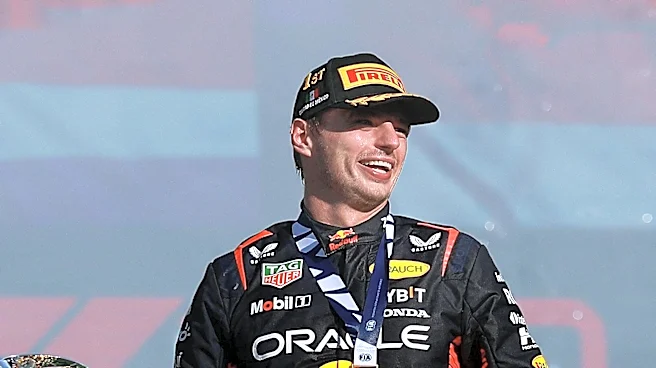
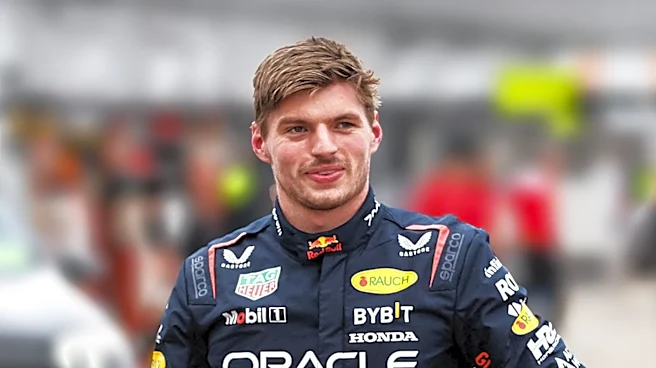
Max Verstappen has publicly supported his Red Bull teammate Isack Hadjar, who received a formal warning from the FIA after shoving a fan in the Mexico Grand Prix paddock. Footage showed Hadjar pushing away a man who had placed a hand on his back while
attempting to take a selfie. The FIA stewards, while issuing a warning for misconduct, acknowledged several mitigating factors, including the fan's aggressive action, the congested paddock area, Hadjar's lack of sufficient security, and the general issue drivers face with personal space invasion. Verstappen stated he understood Hadjar's reaction, calling it "incredibly irritating when people just touch you without asking," and compared the paddock environment to a "zoo."
Why It's Important?
This incident underscores the increasing challenges Formula 1 drivers face with personal space and security in crowded paddock environments. Verstappen's strong support for Hadjar highlights a shared sentiment among drivers regarding intrusive fan behavior. The FIA's decision to issue a warning while acknowledging mitigating factors suggests a recognition of the difficult circumstances drivers operate under. This event could lead to a re-evaluation of paddock access rules and security protocols to better protect drivers, potentially impacting the fan experience and the overall atmosphere of F1 events. It also brings to light the psychological pressure on drivers to maintain composure in public, even when their personal boundaries are crossed.
What's Next?
The FIA may review its guidelines for fan interaction and security measures in the paddock to prevent similar incidents and ensure driver safety and comfort. Discussions among teams and drivers about these issues are likely to continue. Hadjar, having received a formal warning, will need to be mindful of his reactions in public, though the FIA's acknowledgment of the mitigating circumstances provides some context for his actions. This event could contribute to a broader conversation about the balance between fan accessibility and the need for athletes' personal space in high-profile sports.
Beyond the Headlines
The incident and Max Verstappen's comments shed light on the evolving nature of celebrity and public interaction in modern sports. The expectation for athletes to be constantly accessible and 'on' for fans, particularly in an environment like the F1 paddock, can lead to moments of tension when personal boundaries are breached. Verstappen's 'zoo' analogy powerfully conveys a sense of being observed and approached without consent, raising questions about the dehumanizing aspects of extreme fame. This situation prompts a deeper look into the responsibilities of sports organizations to create environments that respect the well-being and privacy of their athletes, while still fostering fan engagement.