

What's Happening?
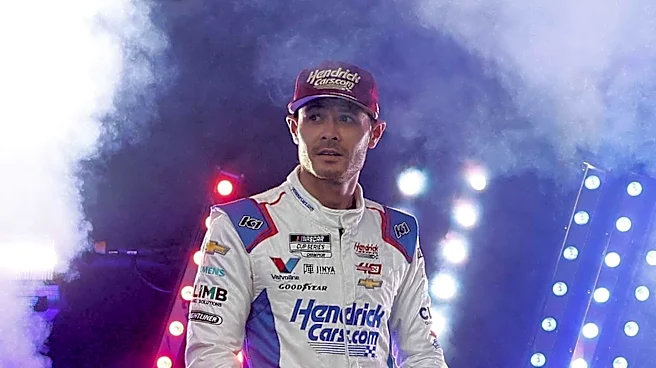
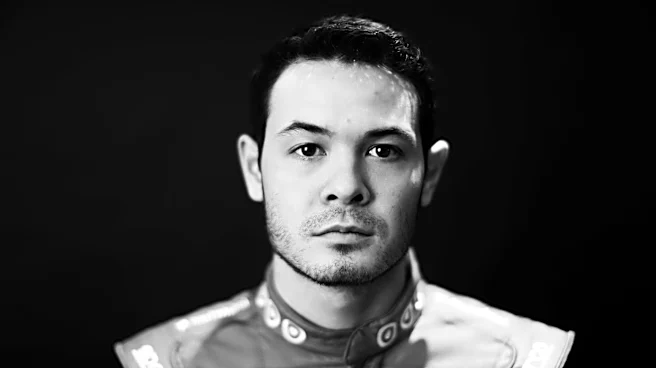
NASCAR driver Kyle Larson has expressed a desire for more Supercars drivers to compete in NASCAR to determine if Shane van Gisbergen's (SVG) exceptional performance on road courses is due to individual talent or a broader cultural advantage from Supercars racing.
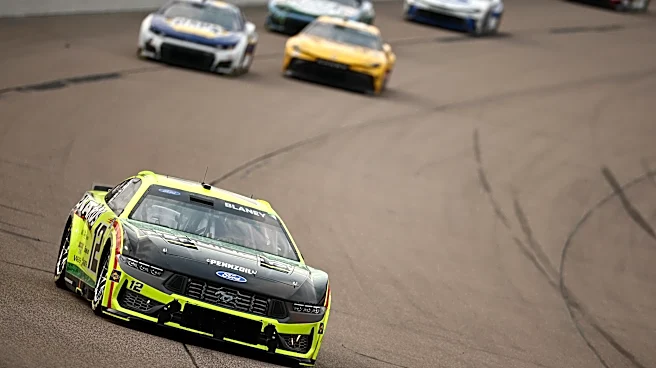
Larson, speaking on the Apex Hunters United podcast, highlighted SVG's significant winning margins, including a 16.567-second victory in Mexico City in 2025, which was the largest in a Cup race in over 15 years. SVG has accumulated eight Cup career victories, all on road courses or street circuits, placing him second on NASCAR's all-time road course wins list, tied with Tony Stewart and one behind Jeff Gordon. Larson admitted that he struggles with right-foot braking, a technique common in Supercars, suggesting a fundamental difference in driving habits between the two racing disciplines. SVG's background includes three Australian Supercars championships and three Bathurst 1000 victories, indicating a deep-rooted expertise in circuits requiring repeated braking, turning, and acceleration.
Why It's Important?
This discussion by Kyle Larson underscores a significant challenge and potential learning opportunity for NASCAR drivers and teams. SVG's consistent dominance on road courses suggests that traditional NASCAR driving techniques may be less effective on these circuits compared to the skills honed in Supercars. If SVG's success is attributable to a broader Supercars racing culture, it could prompt NASCAR teams to re-evaluate their training methods, driver development programs, and car setups for road course events. The influx of more Supercars drivers could provide a clearer benchmark, allowing NASCAR to identify specific areas for improvement. This could lead to a more competitive and diverse racing landscape, potentially attracting new fans interested in the blend of international racing styles. Conversely, if SVG's success is purely individual, it highlights his unique talent and adaptability, setting a high bar for all competitors.
What's Next?
The call for more Supercars drivers in NASCAR could influence future recruitment strategies for teams looking to bolster their road course performance. While a direct influx of drivers is not immediately guaranteed, the conversation might encourage more cross-discipline participation or specialized training for existing NASCAR drivers. Teams might invest in simulators or coaching focused on Supercars-style driving techniques, such as right-foot braking and heel-and-toe downshifting, to close the performance gap. The ongoing success of SVG will likely continue to fuel this debate, potentially leading to a shift in how NASCAR approaches road course racing. The adaptation of SVG to oval tracks, where he has shown improvement with a top-five finish at Nashville and North Wilkesboro in 2026, further complicates the comparison, suggesting that the learning curve is not insurmountable for Supercars drivers in NASCAR.
Beyond the Headlines
The debate surrounding SVG's performance extends beyond mere race results; it touches upon the fundamental differences in racing philosophies and driver development between Supercars and NASCAR. The ingrained driving habits, such as Larson's difficulty with right-foot braking, highlight how deeply these techniques are embedded in a driver's approach. This situation could spark a broader discussion within motorsports about the benefits of cross-pollination between different racing series. It raises questions about whether a more diverse skill set, developed through exposure to various racing disciplines, could produce more versatile and competitive drivers. Ultimately, SVG's impact could lead to a re-evaluation of what constitutes a 'complete' driver in NASCAR, potentially encouraging a more global perspective on driver training and car development.