






What's Happening?
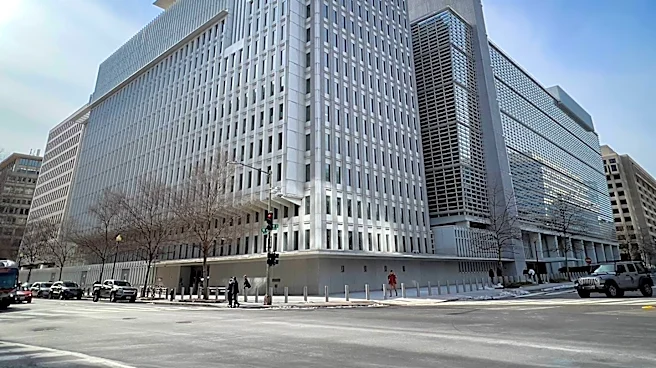
The World Bank is considering a fresh $500 million loan for Nigeria to establish an infrastructure financing and de-risking platform, known as the Nigeria Infrastructure Financing and De-Risking Platform for Growth and Jobs (INFRAGROW). This proposed
loan is part of a larger $3.85 billion initiative designed to attract private investment into critical sectors of the Nigerian economy. The World Bank's Initial Project Information Document, updated on November 4, 2026, lists the Federal Ministry of Finance as the borrower and the Nigeria Sovereign Investment Authority (NSIA) as the implementing agency. The project's technical design review is scheduled for January 21, 2027, with an estimated approval date of May 25, 2027, just four days before Nigeria's next presidential inauguration. The $500 million loan comprises $400 million from the International Bank for Reconstruction and Development and $100 million from the International Development Association. The broader financing structure includes contributions from the Nigerian government, private investors, commercial lenders, and guarantees from international financial institutions.
Why It's Important?
This initiative is crucial for Nigeria, which faces an estimated annual infrastructure financing shortfall of approximately $100 billion, a significant constraint on economic growth, fiscal sustainability, competitiveness, and job creation. The World Bank highlights that the challenge extends beyond insufficient funding to the difficulty of converting available capital into commercially viable infrastructure investments. The INFRAGROW platform aims to address this by combining loans, equity investments, commercial debt, and financial guarantees to attract both domestic and international investors. By de-risking projects and providing structured financing, the platform seeks to unlock private capital for essential infrastructure development in sectors like energy, transport, and water. The project also aims to strengthen public institutions responsible for identifying, preparing, procuring, and supervising public-private partnership projects, thereby improving the overall investment climate and project execution capabilities in Nigeria.
What's Next?
The proposed $500 million loan is currently awaiting approval, with the World Bank having scheduled an estimated approval date of May 25, 2027. This timing, just before Nigeria's presidential inauguration, raises questions about the implications for the incoming administration, although approval does not guarantee immediate disbursement or implementation. The INFRAGROW platform will operate through four independently governed subsidiaries: a Project Preparation Facility, a Viability Gap Fund, a Risk Capital Facility, and a Credit Guarantee Vehicle. These facilities are designed to finance feasibility studies, support economically important projects, provide equity for commercially viable projects, and offer protection against various risks to attract investors. The International Finance Corporation is expected to participate as a co-investor, and the Multilateral Investment Guarantee Agency will provide political risk insurance. The project will also support reforms to strengthen public institutions involved in infrastructure development.
Beyond the Headlines
The World Bank has classified the project's environmental and social risks as high, particularly due to the potential impacts of major infrastructure developments in energy, transport, and water. These risks include land acquisition, displacement of communities, environmental damage, occupational hazards, and other social consequences. The document also points to Nigeria's complex land tenure system, weak sub-national environmental and social governance, and exposure to climate-related vulnerabilities as factors that could increase project risks. While the project aims to attract significant private investment and address critical infrastructure gaps, its success will heavily depend on robust environmental and social risk management, as well as effective governance structures within the four subsidiaries. The initiative also highlights the broader global trend of international financial institutions working to mobilize private capital for development in emerging economies, often through complex de-risking mechanisms and institutional reforms.