

What's Happening?
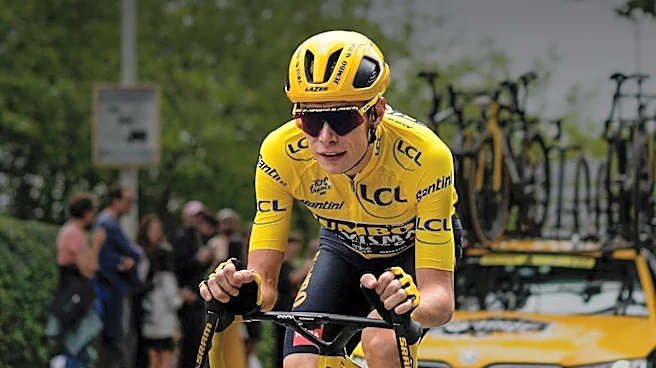
A new study suggests that cyclist Tadej Pogačar might possess one of the highest VO2 Max scores in endurance sports history, potentially reaching up to 102 ml/kg/min. This physiological capability is a key marker of athletic performance, indicating exceptional
oxygen uptake efficiency. The study, conducted by exercise scientists Pedro Valenzuela, Sebastian Sitko, and Ole Kristian Berg, estimates Pogačar's VO2 Max based on his recent performances in major cycling events. These findings place him among the top endurance athletes, potentially redefining the limits of human performance in cycling.
Why It's Important?
Pogačar's extraordinary VO2 Max highlights the evolving standards of athletic performance in cycling, potentially influencing training methodologies and competitive strategies. His physiological capabilities could inspire new approaches to athlete development and performance optimization. This development also underscores the importance of scientific research in understanding and enhancing athletic potential, which could have implications for sports science and the broader field of human physiology.
What's Next?
As the study awaits publication in the International Journal of Sports Physiology and Performance, it may prompt further research into the physiological limits of endurance athletes. Pogačar's continued success could lead to increased interest in his training methods and strategies, potentially influencing future generations of cyclists. Additionally, the cycling community may engage in discussions about the implications of such high VO2 Max levels for competition and athlete health.
Beyond the Headlines
The findings about Pogačar's VO2 Max raise questions about the ethical and health considerations of pushing human physiological limits. As athletes strive for peak performance, there may be increased scrutiny on the balance between natural talent and the pressures of competitive sports. This situation also highlights the role of technology and data analysis in sports, as precise measurements and estimates become crucial in understanding and enhancing athletic performance.