


What's Happening?
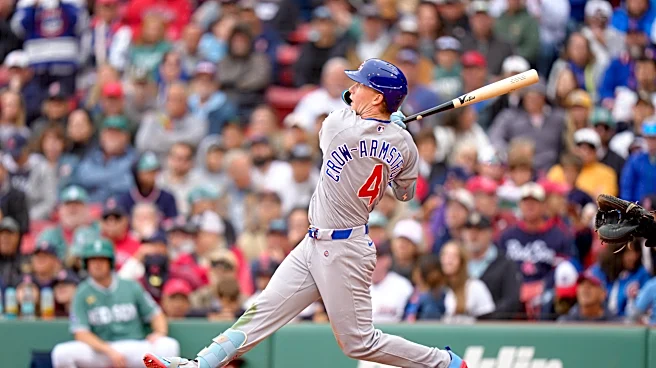
Pete Crow-Armstrong, center fielder for the Chicago Cubs, has been named the 2026 National League Most Valuable Player. This marks the first time a Cubs player has received the award since Kris Bryant in 2016. Crow-Armstrong earned all 30 first-place
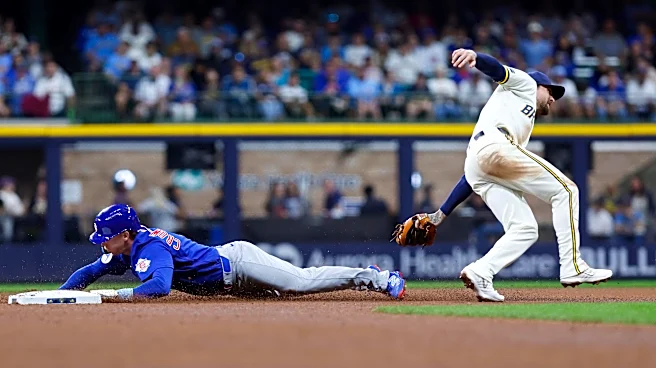
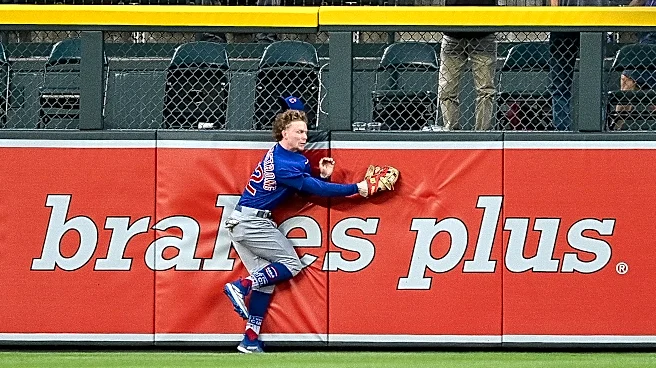
votes from the BBWAA, surpassing Shohei Ohtani of the Los Angeles Dodgers and Brice Turang of the Milwaukee Brewers. His standout season included a .280/.372/.570 batting line, 45 home runs, 107 RBI, 119 runs scored, and 41 stolen bases. He led baseball with a 10.8 fWAR and was the first Cub to hit 40 home runs since Derrek Lee in 2005. Additionally, Crow-Armstrong joined an elite group of players by achieving the 40-40 club (40 home runs and 40 stolen bases) and became the third player ever with at least 45 home runs and 40 stolen bases in a single season. His defensive prowess was also recognized, as he led baseball with 26 Outs Above Average and ranked sixth among outfielders with 10 Defensive Runs Saved, earning his second consecutive Gold Glove.
Why It's Important?
This MVP award is significant for both Pete Crow-Armstrong and the Chicago Cubs franchise. For Crow-Armstrong, it solidifies his status as one of baseball's elite players, demonstrating his exceptional abilities in power, speed, and defense. The award follows a steady progression of accolades, including his first All-Star selection and Gold Glove in 2025, and a six-year, $115 million contract extension signed before the 2026 season. For the Cubs, it ends a 10-year MVP drought and brings significant individual hardware back to the team. This achievement could re-energize the fanbase and potentially attract more talent to the organization. However, despite Crow-Armstrong's historic season, the Cubs finished 14 games out of first place in their division and were swept in the Wild Card round, highlighting the team's broader challenges in building a championship-caliber roster around their star player.
What's Next?
Following his MVP season, the focus for Pete Crow-Armstrong will likely shift to continued personal development and leading the Cubs to greater team success. He has publicly stated that the mental aspect of his game is the final piece needed to reach another level, suggesting potential for even further improvement. For the Chicago Cubs, the immediate challenge will be to construct a competitive team around their 24-year-old star, who is under contract through 2032. This includes addressing deficiencies in their pitching rotation and bullpen to capitalize on Crow-Armstrong's prime years. The organization will face pressure to build a roster capable of contending for a World Series, as individual accolades, while impressive, have not yet translated into deep postseason runs for the team. The team's performance in the upcoming seasons will be crucial in determining if they can leverage Crow-Armstrong's talent effectively.
Beyond the Headlines
Pete Crow-Armstrong's MVP season highlights a broader trend in baseball valuing well-rounded players who excel in multiple facets of the game—power, speed, and defense. His ability to combine elite offensive production with Gold Glove-caliber defense makes him a rare and valuable asset in modern baseball. This type of player profile often becomes a cornerstone for franchises, influencing team building strategies that prioritize versatility and athleticism. The narrative also touches upon the challenge many teams face: how to translate individual superstar performances into collective team success. Despite Crow-Armstrong's historic year, the Cubs' early playoff exit underscores that even generational talent requires a strong supporting cast to achieve ultimate victory. This situation could spark further debate within the Cubs organization and among fans about resource allocation, player development, and the overall strategic direction needed to build a consistent winner.