



What's Happening?
Punk aesthetics, originally characterized by DIY fashion, anti-virtuosity, and a confrontational attitude, have undergone a significant transformation. What began as a counter-cultural movement, heavily influenced by figures like Vivienne Westwood and Malcolm
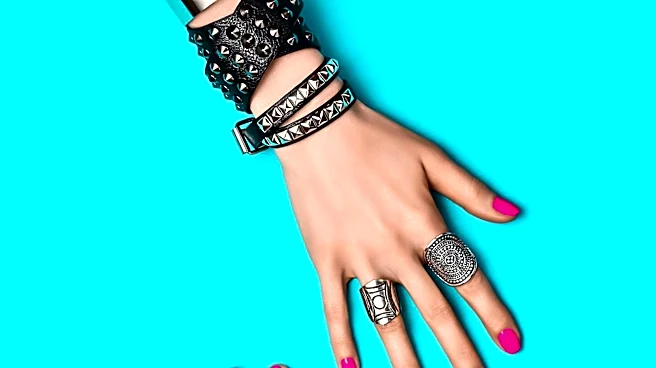
McLaren with elements such as bondage trousers, leather jackets, ripped clothing, and safety pins, has now permeated mainstream culture. The raw, unpolished sound of punk, marked by noise, distortion, speed, and brevity, along with its amateurism and stage violence, defined its early identity. However, this aesthetic, once a symbol of rebellion and deliberate failure, has evolved into something it initially resisted. Torn clothing and safety pins, once hallmarks of punk, are now seen in high fashion collections, and punk records, once underground, have become collector's items. Bands that were once part of niche scenes are now recognized as canonical figures in popular music history, indicating a shift from subversion to commercialization and nostalgia.
Why It's Important?
The evolution of punk aesthetics highlights a broader trend in U.S. society and culture where counter-cultural movements are often absorbed and commodified by the mainstream. This process can lead to the dilution of original artistic and social messages, transforming symbols of rebellion into marketable products. For industries like fashion and music, this means a constant search for new trends, often by drawing from subcultures, which can then be repackaged for mass consumption. While this offers new revenue streams and broader exposure for certain styles, it also raises questions about authenticity and the commercialization of artistic expression. The shift from punk's anti-establishment roots to its current status as a heritage item or a source of nostalgia demonstrates how cultural movements can lose their initial edge as they gain wider acceptance, impacting how future subcultures might be perceived and integrated into the commercial landscape.
What's Next?
The continued integration of punk aesthetics into mainstream fashion and music suggests that this trend of cultural commodification will likely persist. Designers and artists may continue to draw inspiration from punk's visual and auditory elements, further blurring the lines between subculture and high culture. We can anticipate more collaborations between high-end brands and artists influenced by punk, leading to new interpretations of its core elements. The ongoing commercialization might also spark new counter-movements or revivals that seek to reclaim punk's original spirit of rebellion and DIY ethos, potentially leading to a cyclical pattern of subculture emergence, mainstream adoption, and subsequent counter-reactions. This dynamic will continue to shape trends in fashion, music, and art, influencing consumer choices and cultural narratives.
Beyond the Headlines
The transformation of punk aesthetics from a radical subculture to a mainstream commodity raises profound questions about cultural appropriation and the nature of artistic legacy. What happens when symbols of defiance become fashion statements, stripped of their original political or social context? This phenomenon can lead to a superficial understanding of historical movements, where the aesthetic is embraced without acknowledging the underlying philosophy or struggle. It also highlights the tension between artistic integrity and commercial viability, as artists and movements grapple with the allure of mainstream success versus the preservation of their core values. The commodification of punk serves as a case study for how capitalism can absorb and neutralize revolutionary impulses, turning them into products for consumption, and prompting reflection on how society values and remembers its counter-cultural past.