







What's Happening?
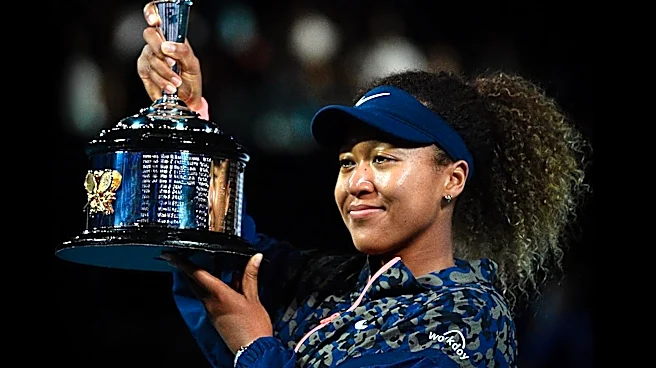
Naomi Osaka, the Japanese four-time Grand Slam champion, marked her return to Tokyo with a win in the first round of the Pan Pacific Open. She defeated Jasmine Paolini with a score of 6-3, 7-6 (7-4) at Ariake Coliseum. Osaka quickly established a 3-0
lead in the first set, though Paolini managed to level the score. Despite Paolini having a break point for a 4-3 lead, Osaka held her ground and won the next three games to secure the first set. The second set was closely contested, with Osaka saving three consecutive set points at 5-6 before ultimately winning the game and closing out the match in a tiebreak.
Why It's Important?
Naomi Osaka's victory in her home country is significant for several reasons. As a prominent figure in tennis, her performance can influence fan engagement and viewership, particularly in the Asian market. Her return to competitive play and immediate success can boost her rankings and confidence, potentially leading to stronger performances in future tournaments. For the sport of tennis, Osaka's presence and wins contribute to the overall excitement and competitive landscape, drawing attention to the Pan Pacific Open and women's tennis globally. Her success also serves as an inspiration for aspiring athletes, especially in Japan, highlighting dedication and resilience in professional sports.
What's Next?
Following this initial victory, Naomi Osaka will continue her participation in the Pan Pacific Open. Her performance in subsequent rounds will be closely watched as she aims to advance further in the tournament. A strong showing could signal a resurgence in her career and set the stage for future Grand Slam appearances. The tournament will also provide an opportunity for her to refine her game and build momentum. Fans and analysts will be observing her consistency and form as she progresses, anticipating her potential impact on the broader tennis circuit in the coming months.
Beyond the Headlines
Beyond the immediate results, Naomi Osaka's return to the court carries deeper implications regarding athlete well-being and mental health in professional sports. Her previous breaks from the sport to prioritize her mental health have brought significant attention to these issues. Her successful return and competitive performance can serve as a powerful message that athletes can prioritize their well-being without sacrificing their careers. This narrative contributes to a broader cultural shift in sports, encouraging more open discussions about mental health and fostering a supportive environment for athletes facing similar challenges. Her journey continues to highlight the human aspect of elite sports.