






What's Happening?
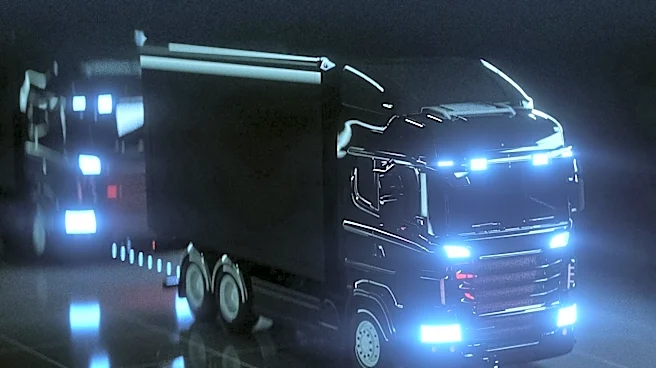
Pony.ai is advancing its autonomous freight business with the deployment of Gen-4 autonomous heavy-duty trucks and light-duty trucks. The company aims to deploy 500 to 1,000 heavy-duty trucks in China over the next two to three years, focusing on long-haul
freight, bulk commodity transportation, and port logistics. Pony.ai's strategy involves using the same Virtual Driver technology across different vehicle types, including Robotaxis, to enhance operational efficiency. The company has reduced the cost of autonomous driving hardware by 70% in its latest truck models, making large-scale deployment more feasible. Pony.ai's business model involves partnerships with vehicle manufacturers and logistics operators, allowing it to focus on providing autonomous driving technology while partners handle vehicle production and fleet operations.
Why It's Important?
The development of autonomous freight technology by Pony.ai represents a significant shift in the logistics industry, addressing challenges such as driver shortages and safety risks associated with long hours and demanding routes. By reducing operating costs and increasing cargo capacity, Pony.ai's autonomous trucks could transform freight operations, particularly in high-demand and repetitive routes. The company's approach to integrating its technology with existing logistics systems could set a precedent for future collaborations between tech companies and traditional industries. This advancement also highlights the growing role of AI and automation in reshaping industries, potentially leading to increased efficiency and reduced costs in freight transportation.
What's Next?
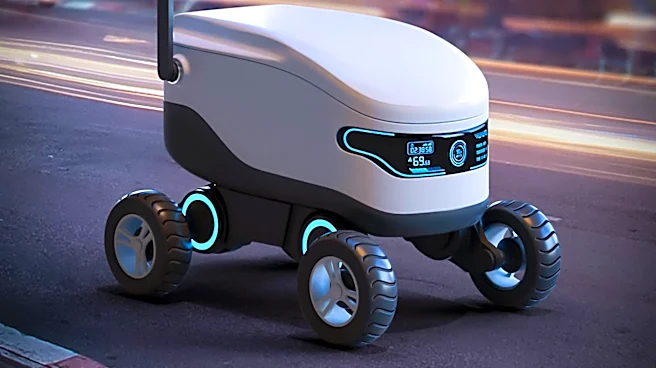
Pony.ai plans to focus on ramping up production of its Gen-4 heavy-duty trucks and deploying them in commercial projects. The company is also working on obtaining regulatory approvals for fully driverless operations of its light-duty trucks. As the market matures, Pony.ai expects to shift towards a partner-led deployment model, where logistics partners own and operate the fleets, and Pony.ai provides the autonomous driving technology. The company is also exploring opportunities in overseas markets, particularly in ports and logistics sites where automation can address labor shortages and reduce costs.