




What's Happening?
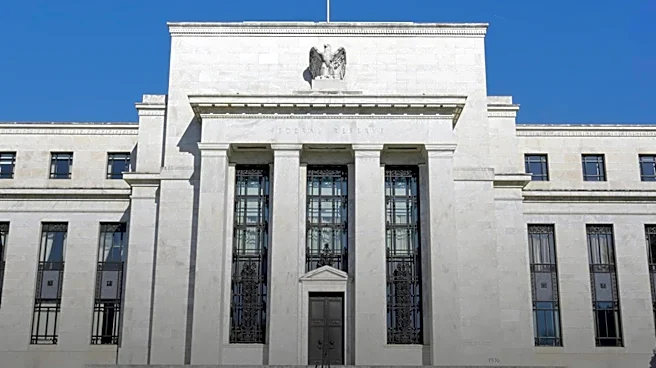
Neil Dutta, head of US economic research at Renaissance Macro Research, has stated that the Federal Reserve made an error by maintaining steady interest rates in October. According to Dutta, the Fed's decision to hold rates constant was a mistake, and
he suggests that multiple rate hikes may be necessary in the near future. This assessment comes as inflation continues to exceed the Federal Reserve's target of 2%. Dutta's comments, made to Bloomberg This Weekend, highlight a growing concern among some economic analysts regarding the effectiveness of the Fed's current approach to combating persistent inflation. The Federal Reserve's mandate includes maintaining price stability, and its interest rate decisions are a primary tool for achieving this goal. The current inflation levels, remaining stubbornly above the 2% target, indicate that the economic environment may require more aggressive monetary policy interventions than previously implemented.
Why It's Important?
This critique from a prominent economic research head underscores the ongoing debate surrounding the Federal Reserve's monetary policy and its impact on the U.S. economy. If Dutta's analysis is accurate, and the Fed has indeed misjudged the necessary actions, it could lead to prolonged periods of higher inflation, eroding purchasing power for American consumers and increasing operational costs for businesses. Further rate hikes, while potentially curbing inflation, could also slow economic growth, impacting employment and investment. Businesses might face higher borrowing costs, potentially leading to reduced expansion and hiring. Conversely, if the Fed acts too slowly, the risk of inflation becoming entrenched in the economy increases, making it even harder to control in the long run. This situation puts the Federal Reserve in a challenging position, balancing the need to control inflation with the desire to avoid a significant economic downturn.
What's Next?
The Federal Reserve will likely continue to monitor economic data closely, particularly inflation figures and employment reports, to inform its future policy decisions. Dutta's comments suggest that market participants and analysts will be scrutinizing upcoming Fed meetings for any indications of a shift towards more aggressive rate hikes. If inflation remains elevated, pressure on the Fed to act will intensify, potentially leading to a series of rate increases in the coming months. Such actions would have ripple effects across various sectors, including housing, consumer lending, and corporate finance. Businesses and consumers should prepare for the possibility of a tighter monetary policy environment, which could influence investment decisions, spending habits, and overall economic activity. The Fed's next moves will be critical in shaping the trajectory of the U.S. economy.
Beyond the Headlines
The ongoing debate about the Federal Reserve's inflation strategy highlights a broader challenge in modern economic policymaking: the difficulty of accurately forecasting and responding to complex economic forces. The 'stubbornly above 2% target' inflation suggests that the underlying causes might be more deeply rooted than initially perceived, possibly involving supply chain disruptions, geopolitical events, or shifts in consumer behavior. This situation could lead to a re-evaluation of traditional monetary policy tools and their efficacy in a rapidly changing global economic landscape. The potential for multiple rate hikes also raises questions about the long-term sustainability of economic growth and the distribution of economic burdens. Different segments of society, from low-income households to large corporations, will experience the effects of these policies differently, potentially exacerbating existing economic inequalities. The Fed's decisions will not only impact financial markets but also the daily lives of millions of Americans.