








What's Happening?
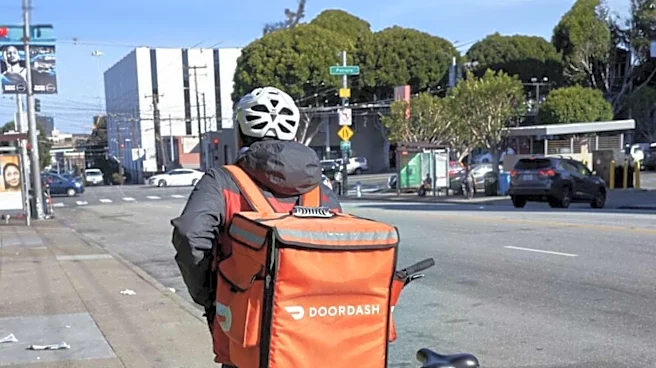
DoorDash has agreed to acquire Instacart for approximately $17 billion in a cash-heavy transaction. This deal aims to combine DoorDash's delivery logistics with Instacart's grocery fulfillment, advertising, and AI tools. In a separate significant transaction,
EQT has reached an all-stock agreement to acquire Range Resources, which would create a natural gas producer with an enterprise value exceeding $50 billion. These are among the largest headline items in recent private market activities. Other notable transactions include Baker Hughes' $1.45 billion sale of Waygate Technologies to Hexagon, BP's completion of a $6 billion sale of a 65% stake in Castrol to Stonepeak, and Blackstone's agreement with Canadian institutional investors to acquire a 49.9% stake in LNG Canada's liquefaction business for $3.1 billion. These deals highlight a dynamic period in mergers and acquisitions across various sectors.
Why It's Important?
The DoorDash-Instacart acquisition is significant for the U.S. delivery and grocery sectors, potentially reshaping the competitive landscape by creating a more integrated service offering. This consolidation could lead to increased efficiency and expanded market reach for the combined entity, impacting consumers through broader service availability and potentially altered pricing structures. For the natural gas industry, EQT's acquisition of Range Resources signifies a major consolidation, creating a dominant player with substantial enterprise value. This could influence natural gas production, supply, and pricing in the U.S. market. The other transactions, involving energy and industrial assets, reflect ongoing strategic realignments and capital deployment by major firms like BP and Blackstone, indicating a continued focus on optimizing portfolios and investing in key infrastructure and technology. These large-scale M&A activities demonstrate a robust, albeit selective, private market environment.
What's Next?
The DoorDash-Instacart acquisition will proceed with integration efforts, focusing on combining their respective delivery, grocery, advertising, and AI capabilities. This will likely involve operational restructuring and technological harmonization to realize the synergies outlined in the deal. For the EQT-Range Resources merger, the all-stock agreement will move towards regulatory approvals and shareholder votes, with the ultimate goal of forming a unified natural gas entity. The success of these integrations and mergers will be closely watched by investors and competitors, as they could set new benchmarks for market dominance and operational efficiency in their respective industries. Further M&A activities in these sectors may be influenced by the outcomes of these major deals, as companies seek to adapt to evolving market dynamics and competitive pressures.
Beyond the Headlines
The DoorDash-Instacart merger underscores a broader trend of convergence in the on-demand economy, where companies are seeking to offer comprehensive services to capture a larger share of consumer spending. This could lead to fewer, larger players dominating the market, raising questions about competition and consumer choice. The EQT-Range Resources deal highlights the ongoing consolidation in the energy sector, driven by the pursuit of scale and efficiency in a volatile market. These large transactions also reflect the continued importance of private equity and institutional investors in shaping major industries, often through complex financing structures and strategic asset reallocations. The environmental implications of such large-scale natural gas production, as well as the labor practices within the gig economy, remain critical long-term considerations that extend beyond the immediate financial aspects of these deals.