








What's Happening?
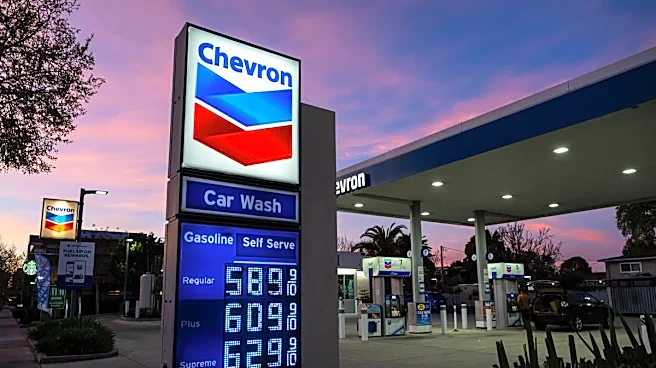
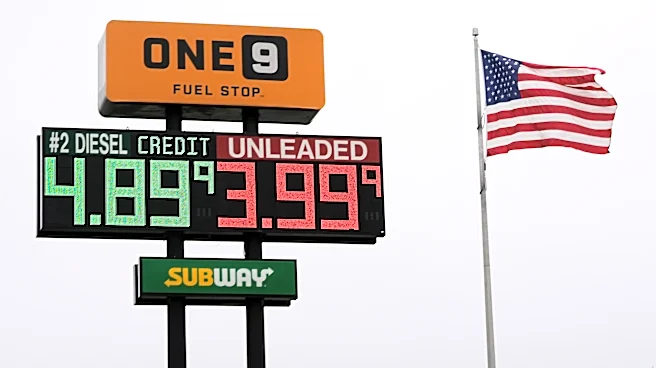
The recent easing of the Strait of Hormuz crisis has led to a drop in U.S. crude oil futures, which have fallen to under $80 a barrel, their lowest level since March. This development is expected to provide some relief at the gas pump for American consumers.
However, the impact of lower oil prices on other goods and services may not be immediate. While gasoline prices tend to respond quickly to changes in crude oil, lower energy costs can take longer to affect groceries, household goods, and other everyday expenses. Economists note that while the rate of inflation may level off, most prices will only rise more slowly rather than decrease.
Why It's Important?
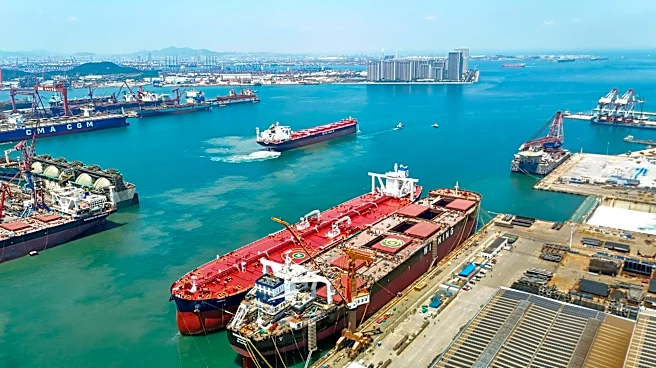
The easing of the Hormuz crisis and subsequent drop in oil prices could have significant implications for the U.S. economy. Lower gasoline prices may provide some relief to consumers, but the broader economic impact may be limited if other costs remain high. The situation highlights the complex interplay between global events, energy prices, and domestic inflation. Economists caution that even if energy costs continue to ease, consumers may not see immediate benefits due to factors such as elevated freight rates, risk premiums, and refinery disruptions.
What's Next?
As the situation in the Strait of Hormuz stabilizes, attention will turn to the recovery of oil supplies and the replenishment of strategic reserves, which could influence future oil prices. Consumers and businesses will be watching for signs of broader price reductions across the economy, although these may take time to materialize. Financial analysts and economists will continue to monitor inflation trends and the potential impact on consumer spending and economic growth.