




What's Happening?
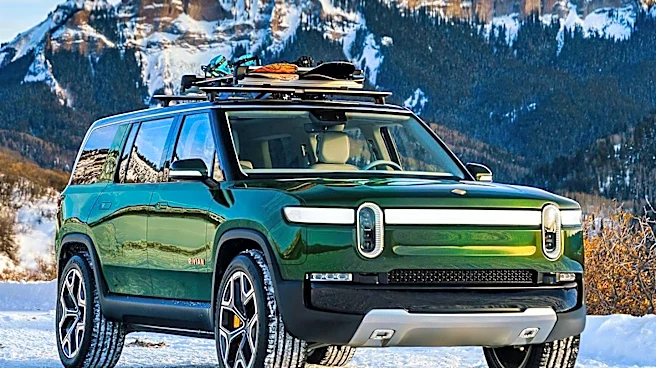
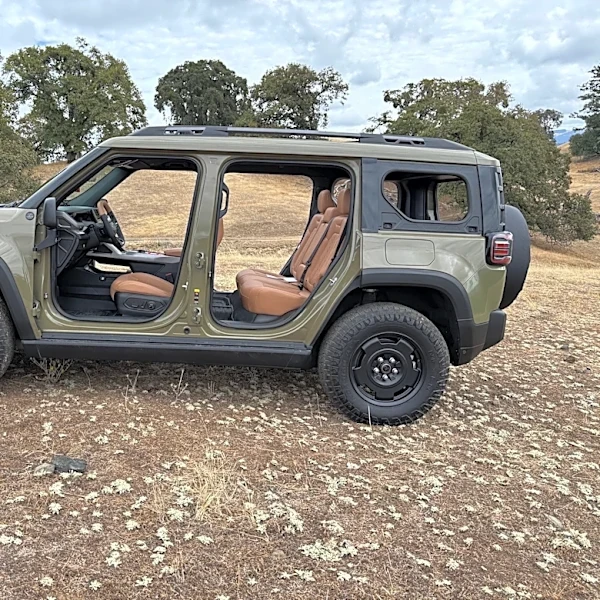
Rivian Automotive, Inc. (NASDAQ:RIVN) has reported that demand for its R2 electric SUV is exceeding initial expectations, with strong reservation conversion rates. This information was shared by Chip Newcom, Rivian's vice president of investor relations,
at a Goldman Sachs event. The company is actively collecting $100 refundable deposits and inviting customers in waves to configure their vehicles. Concurrently, Rivian is making significant strides in its autonomy capabilities, targeting supervised point-to-point driving for late 2026 and an 'eyes-off' system for 2027. The company is also rolling out a major software overhaul to unify the user experience across its R1T pickup, R1S SUV, and the newer R2 SUV. This update includes a rebuilt interface, enhanced real-time graphics, and a deeper unified intelligence system. Rivian is also continuing to ramp up R2 manufacturing at its Normal, Illinois plant, with plans to add a second production shift in the third quarter, while managing supplier relationships to ensure production targets are met.
Why It's Important?
The strong demand for Rivian's R2 SUV is a critical indicator of the company's potential to broaden its market appeal beyond the premium R1 platform. This expansion into a more accessible price point is vital for Rivian's long-term growth and profitability in the competitive electric vehicle market. Exceeding demand expectations can lead to increased production, economies of scale, and a stronger financial position. Furthermore, the advancement of autonomy features, including supervised and 'eyes-off' driving, positions Rivian as a leader in automotive technology. These capabilities are increasingly becoming a key differentiator for consumers and could attract a wider customer base seeking advanced driver-assistance systems. The software overhaul is also significant as it aims to create a cohesive and improved user experience across all models, which can enhance customer satisfaction and brand loyalty, crucial for a relatively new automotive manufacturer.
What's Next?
Rivian plans to continue ramping up R2 manufacturing at its Normal, Illinois plant, with a second production shift expected in the third quarter. The company anticipates that increased R2 deliveries and better fixed-cost absorption will contribute to becoming automotive gross-profit positive on an exit-rate basis by year-end. The supervised point-to-point driving feature is slated for introduction towards the end of 2026, with an 'eyes-off' system targeted for 2027. Rivian will continue to validate system performance and conduct public road testing for its autonomy features. The company is also working on its Gen 3 system, which is on track for late 2026 and is expected to offer lower-cost configurations. Additionally, Rivian's partnership with Uber is set to involve further equity funding and the potential purchase of up to 50,000 vehicles, with L4 robotaxi testing planned for San Francisco, Miami, and Chicago by year-end.
Beyond the Headlines
The success of Rivian's R2 model and its advanced autonomy features could significantly influence the broader electric vehicle market. By offering a more affordable yet technologically advanced SUV, Rivian challenges established players and other EV startups, potentially accelerating the adoption of electric vehicles across different consumer segments. The company's focus on software differentiation and over-the-air updates highlights a growing trend in the automotive industry where vehicles are increasingly viewed as 'software-defined' platforms that can evolve post-purchase. This approach could set new industry standards for vehicle ownership and customer engagement. Furthermore, Rivian's strategic partnership with Uber for robotaxi development indicates a potential shift towards integrated mobility solutions, where vehicle manufacturers play a dual role in consumer sales and ride-sharing services, blurring the lines between traditional automotive and tech industries.