








What's Happening?
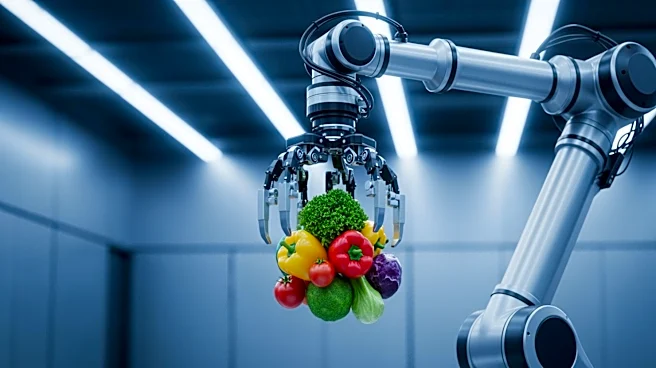
The U.S. robotics industry saw a notable increase in industrial robot installations, rising by 11% in 2025, according to the International Federation of Robotics (IFR). This growth was largely driven by the food industry, which experienced a 30% surge
in automation adoption. The automotive sector remains the largest adopter, with 13,500 units installed, marking its third-best performance in seven years. The U.S. now ranks eighth globally in robot density, with 307 industrial robots per 10,000 manufacturing employees. Despite this progress, China continues to dominate the global market, with 295,000 units installed in 2024, representing a 54% market share.
Why It's Important?
The growth in the U.S. robotics industry highlights a shift towards increased automation across various sectors, particularly in non-manufacturing areas like the food industry. This trend is crucial for addressing labor shortages and enhancing productivity. The U.S. aims to strengthen its position in the global robotics market, where it currently lags behind countries like South Korea and Germany in robot density. The expansion of automation is expected to drive economic growth and competitiveness, especially as manufacturers invest in technology to fill workforce gaps. The development of a national robotics strategy, as advocated by the Association for Advancing Automation, could further bolster this growth by coordinating policy and fostering public-private partnerships.
What's Next?
The Association for Advancing Automation has proposed a 'Vision for a National Robotics Strategy' to U.S. lawmakers. This strategy includes establishing a Federal Robotics Office and a national commission to harmonize government research and promote public-private partnerships. It also suggests market-driven tax incentives, expanded workforce retraining, updated safety standards, and a federal mandate to purchase domestic robotics technology. These measures aim to accelerate the commercial deployment of robotics and ensure the U.S. remains competitive in the global market.