





What's Happening?
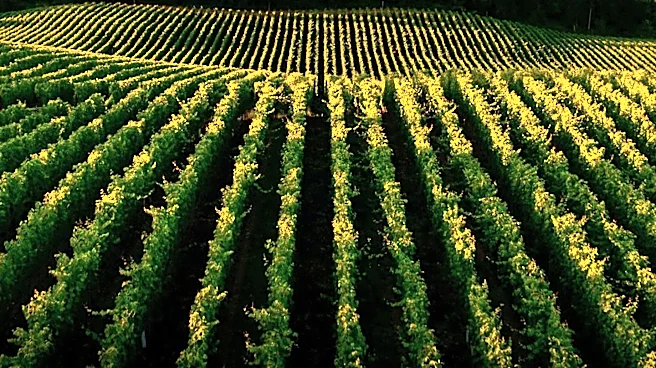
Regenerative viticulture is emerging as a transformative approach in wine production, focusing on rebuilding soil health, capturing carbon, and restoring biodiversity. This farming philosophy goes beyond organic and biodynamic methods, incorporating practices
such as cover crops, minimal tillage, integrated animals, on-site composting, and biodiversity corridors. The movement is gaining traction globally, with significant adoption in regions like California, Bordeaux, Tuscany, and Chile. These practices aim to address environmental challenges such as soil degradation, water shortages, and biodiversity loss, while offering travelers a unique tasting experience grounded in ecological change.
Why It's Important?
The shift towards regenerative viticulture is crucial as it addresses pressing environmental issues that traditional viticulture methods have struggled with. By improving soil health and biodiversity, these practices contribute to climate resilience and sustainable agriculture. For the wine industry, this approach not only enhances the ecological footprint but also potentially improves wine quality by fostering healthier ecosystems. As consumer interest in sustainable products grows, regenerative viticulture could redefine premium wine production, offering a competitive edge to producers who adopt these practices.